

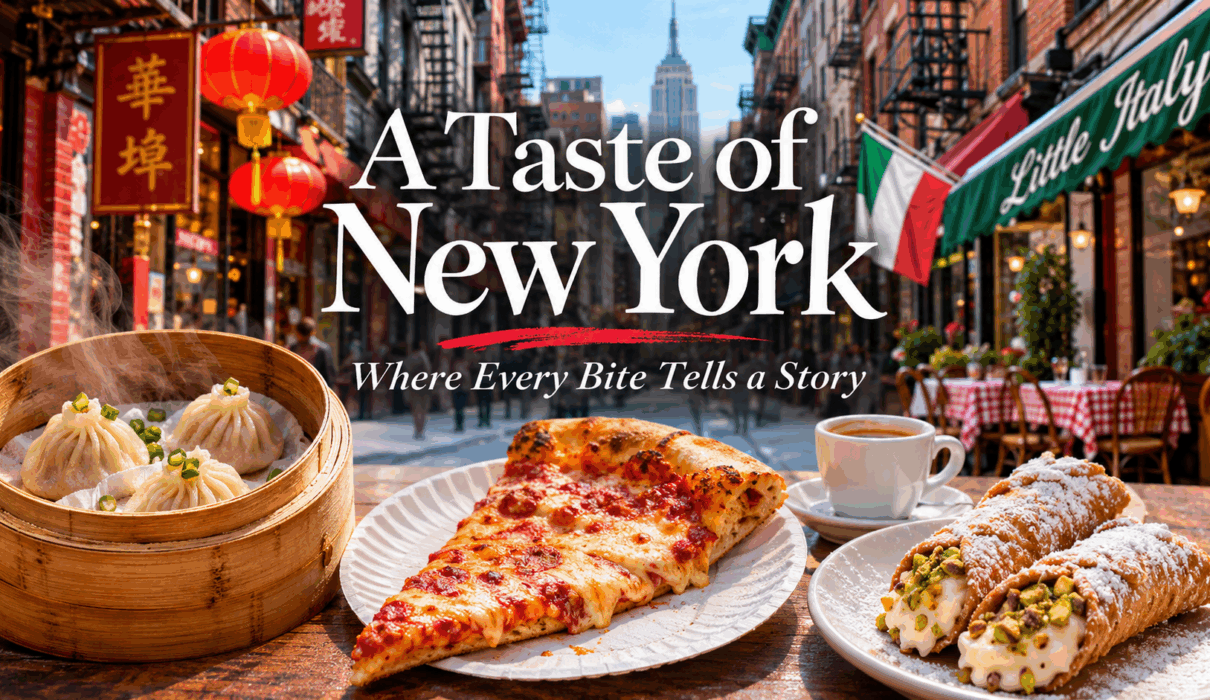
By Olivia Bennett | Wonders of the World
Some cities are instantly recognizable by their landmarks. Paris has the Eiffel Tower, Rome has the Colosseum, and New York has its towering skyline and the Statue of Liberty.
But I’ve always believed that the best way to truly understand a city isn’t by visiting its most famous attractions. It’s by wandering away from the usual tourist routes, stepping into a little family-owned restaurant, or tasting something made from a recipe that has been passed down for generations.
And when it comes to discovering a city through food, few places in the world can compete with New York.
In this extraordinary city, a short walk can feel like a journey across continents. In Lower Manhattan, you can find yourself surrounded by the aromas of Chinese cooking, only to turn a corner a few minutes later and catch the irresistible scent of freshly brewed Italian espresso.
What makes these neighborhoods so fascinating isn’t simply the variety of food. It’s the stories behind it.
Every dumpling, slice of pizza, and traditional pastry carries a piece of the history of people who crossed oceans, left their homes behind, and arrived in America hoping to build a better future.
And sometimes, the most interesting way to discover those stories is simply to follow your appetite.
Chinatown – A Little Piece of China in the Heart of Manhattan
Walking through Manhattan’s Chinatown, it’s easy to forget you’re in the United States.
Chinese signs hang above narrow streets, small grocery stores display unfamiliar ingredients, bakeries fill the air with the smell of freshly baked treats, and golden-brown roasted ducks hang in restaurant windows.
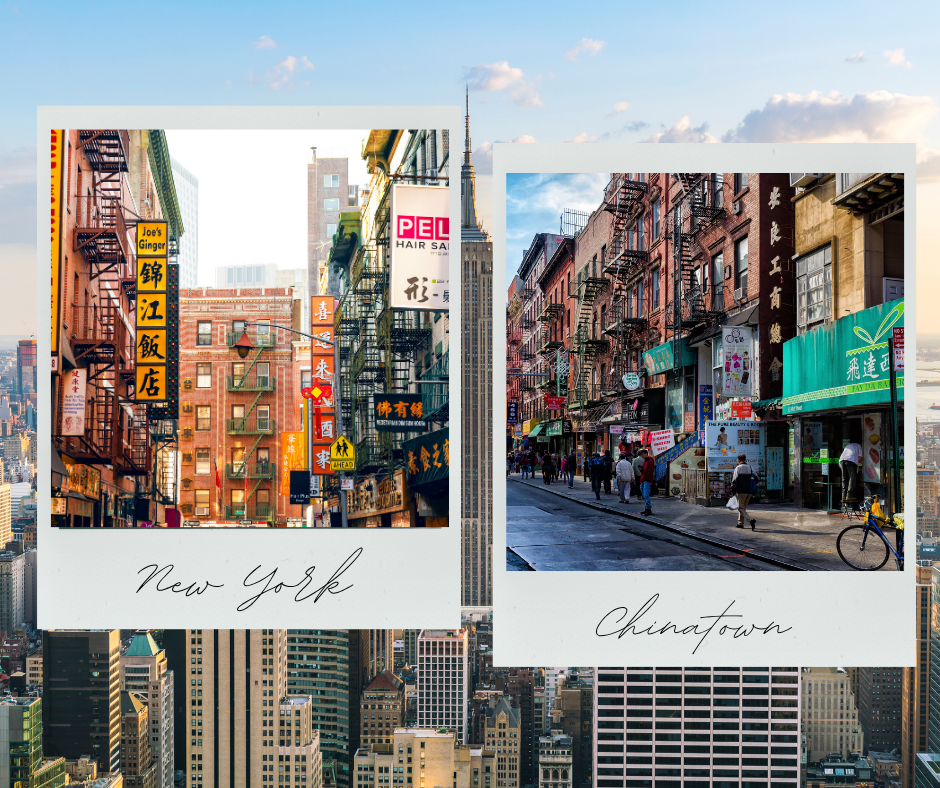
Everywhere you look, there’s movement, conversation, and the unmistakable energy of a neighborhood that has developed its own rhythm over generations.
But Chinatown wasn’t always the colorful, bustling destination visitors know today.
Its history stretches back to the 1870s, when Chinese immigrants began establishing a community in Lower Manhattan. Many had previously worked on America’s railroads and were searching for new opportunities. Life was far from easy.
Chinese immigrants faced widespread discrimination, and the Chinese Exclusion Act of 1882 severely restricted immigration and made it difficult for families to reunite. Yet the community survived.
Small businesses, laundries, tea houses, and restaurants became more than places to earn a living. They offered familiarity, connection, and a sense of belonging in a country that often made newcomers feel unwelcome.
Perhaps that’s what makes Chinatown’s old family restaurants so special.
Behind their doors, recipes have been preserved and passed from one generation to the next, keeping memories of a distant homeland alive.
A Basket of Dumplings and a Century of Stories
One of Chinatown’s most intriguing streets is Doyers Street. This short, unusually curved street has a surprisingly dramatic past. During the early 20th century, violent clashes between rival groups earned it the nickname “Bloody Angle.”
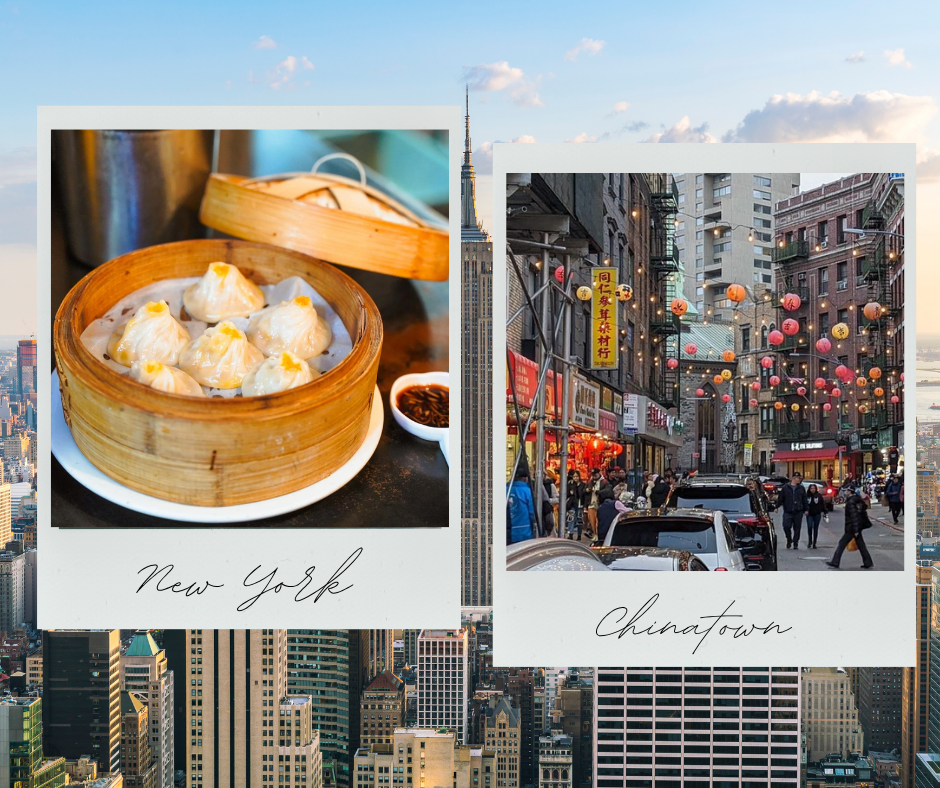
Today, the atmosphere couldn’t be more different. Here you’ll find the legendary Nom Wah Tea Parlor, a Chinatown institution whose history dates back to 1920.
It’s one of those places that reminds us how much history can be hidden behind an ordinary restaurant entrance.
Dim sum is one of the most delightful traditions of Chinese cuisine. Small dishes arrive at the table, often meant to be shared: delicate steamed dumplings, savory buns, filled pastries, and, of course, tea.
What I find especially appealing about dim sum is that it isn’t just about eating. It’s about slowing down.
People gather around a table, share food, exchange stories, and enjoy being together.In a city where everyone seems to be rushing somewhere, that feels like a luxury in itself.
And as a basket of freshly steamed dumplings arrives at the table, it’s easy to imagine similar conversations taking place here a hundred years ago.
Different people. Different lives. Different dreams. But the same simple desire to find a little piece of home in the middle of New York City.
Roast Duck and the Secrets of Chinese Cooking
As you wander through Chinatown, it’s almost impossible to miss the beautifully roasted ducks hanging in restaurant windows.
Their glossy, golden-brown skin is enough to make anyone stop and take a closer look.
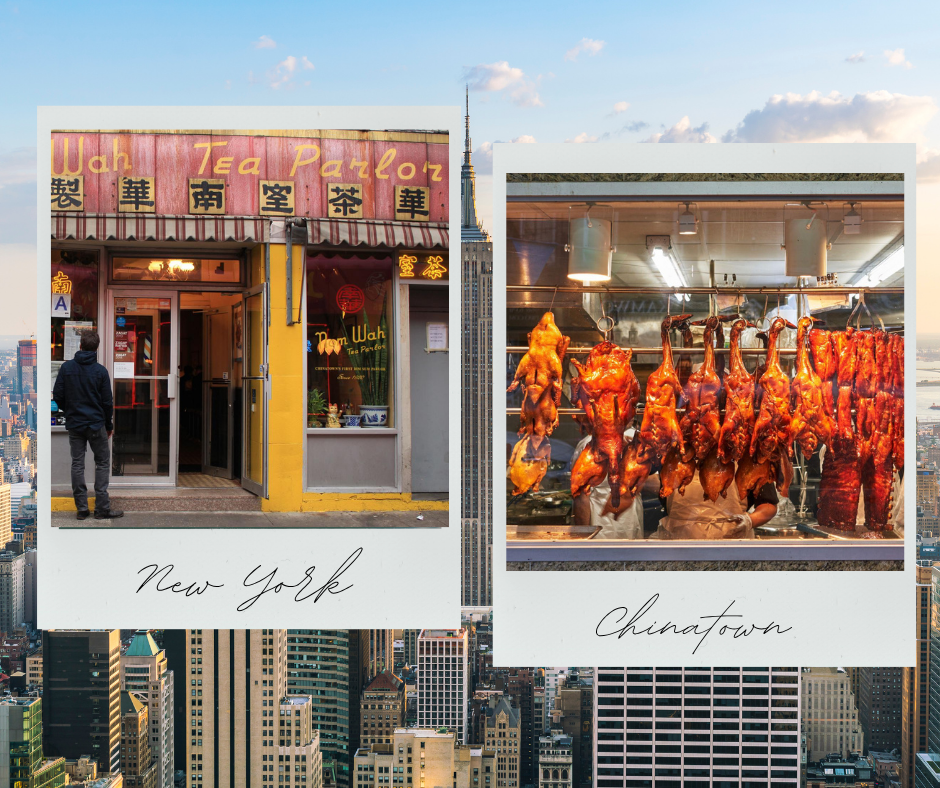
Cantonese roast duck is one of the region’s most recognizable dishes, and preparing it properly requires considerable skill.
The meat is carefully seasoned and roasted until the skin develops its characteristic color and texture. In many kitchens, the techniques have been refined and handed down through generations.
Many of New York’s earliest Chinese immigrants came from southern China, which is why Cantonese cooking played such an important role in shaping Chinatown’s culinary identity.
Over time, new waves of immigrants arrived from other regions, bringing different flavors, ingredients, and cooking traditions.
Today, Chinatown’s food scene is as diverse as New York itself. And that’s one of the things I love most about exploring a destination through its food.
Sometimes, a single dish can tell us more about a community’s history than an entire museum exhibition.
Little Italy – When New York Suddenly Feels Italian
Just a few minutes from Chinatown, the atmosphere begins to change. Chinese storefront signs give way to Italian restaurants, red, white, and green flags hang above the sidewalks, and the smell of espresso, tomato sauce, and freshly baked pizza drifts through the streets.
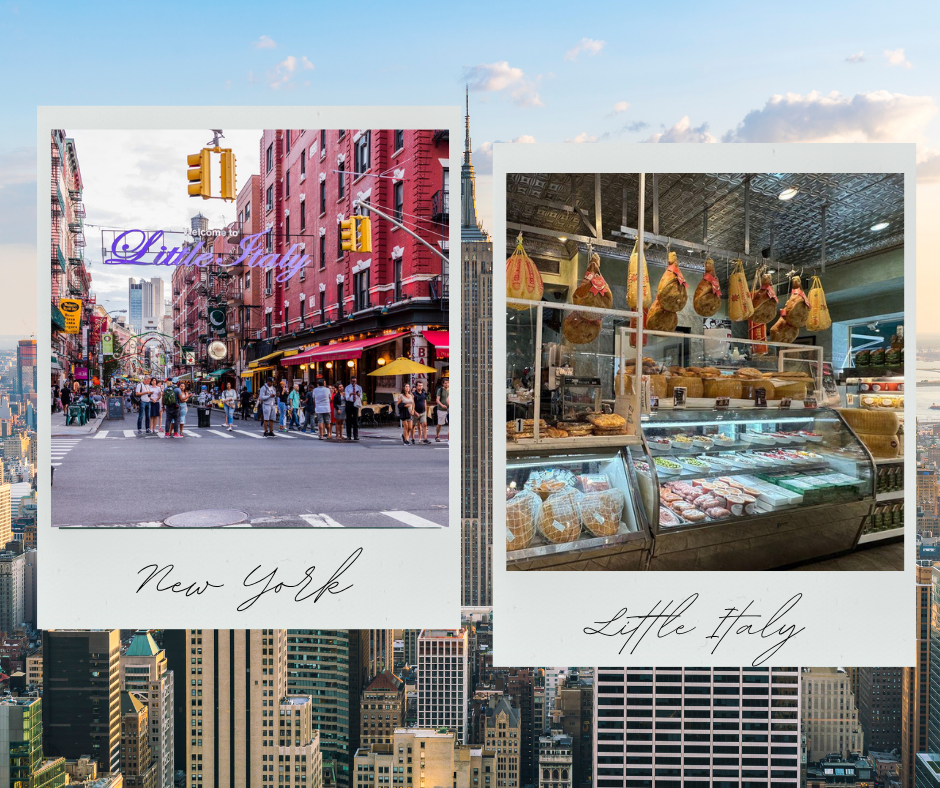
Welcome to Little Italy.
Italy has always held a special place in my heart, so discovering traces of Italian culture in different corners of the world is something I particularly enjoy. But New York’s Little Italy is not quite like a small town in Italy.
It isn’t simply a copy of the country its name celebrates. Instead, it tells the story of how Italian immigrants tried to create a new home in a completely unfamiliar world.
During the late 19th and early 20th centuries, millions of Italians immigrated to the United States, many arriving from southern Italy and Sicily.
They brought their language, religious celebrations, family traditions, and, perhaps most importantly, their recipes.
Mulberry Street became an important center for immigrants from Naples, while Sicilian and Calabrian families settled in nearby streets. At its height, Little Italy covered a much larger area than it does today.
Over the decades, many Italian-American families moved to other parts of New York, and the neighborhood gradually became smaller. Yet a handful of historic shops, restaurants, and bakeries continue to preserve its remarkable heritage.
Mozzarella – A Little Taste of Home
One of the things I’ve always appreciated about Italian cooking is its ability to turn the simplest ingredients into something extraordinary. Good mozzarella, a few ripe tomatoes, fresh basil, and a drizzle of olive oil. Sometimes, that’s all you need for a perfect meal.
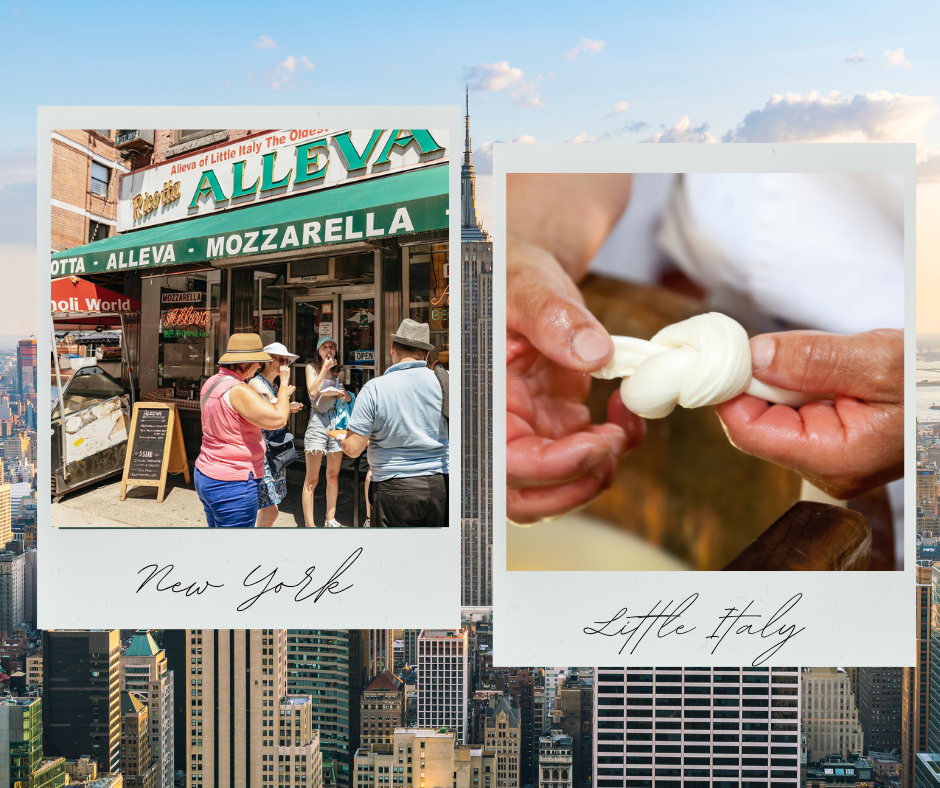
One of Little Italy’s best-known historic food shops is Di Palo’s Fine Foods, whose story began in 1910. The family originally came from the Basilicata region of southern Italy, and over the generations, their store became a beloved destination for authentic Italian specialties. Fresh mozzarella, provolone, olives, cured meats, and countless other delicacies fill the counters.
But these foods represent something much deeper than a collection of imported ingredients. They’re memories of another continent.
I often wonder what a shop like this must have meant to immigrants who had left their hometowns thousands of miles behind.
Perhaps the taste of a familiar cheese, an old family recipe, or a conversation in their native language could transport them, if only for a moment, back to the village where their journey began.
New York has changed enormously since those early days. Yet places like Di Palo’s still preserve a little of the world those immigrants carried with them.
Cannoli – A Little Sicilian Happiness in New York
If there’s one thing I find almost impossible to resist in an Italian pastry shop, it’s a good cannoli.
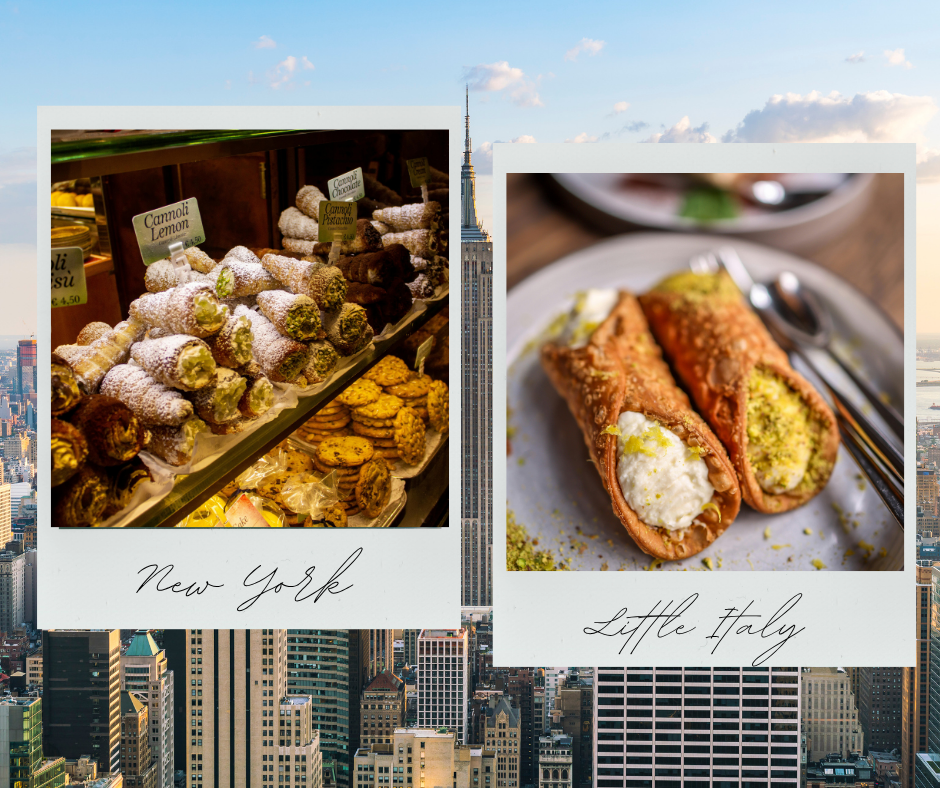
A crisp pastry shell filled with sweet, creamy ricotta, sometimes finished with pistachios or chocolate. It’s simple, indulgent, and absolutely delicious. Originally from Sicily, cannoli became a beloved part of New York’s Italian-American food culture thanks to generations of immigrants who brought their culinary traditions across the Atlantic.
One of Little Italy’s most famous pastry shops is Ferrara Bakery & Cafe, established in 1892.
For well over a century, Ferrara has been serving Italian pastries and desserts, with cannoli remaining among its signature specialties.
There’s something wonderful about the way such a small dessert can connect so many different stories.
A grandmother’s recipe from Sicily. A family beginning a new life in America. And a curious traveler discovering those traditions more than a century later. Food has an extraordinary ability to bring people together.
We don’t need to speak the same language or come from the same country to appreciate something made with care and tradition. Sometimes, one bite is enough.
New York Pizza – An Italian Story with an American Twist
Of course, no culinary journey through New York would be complete without pizza.
The city’s famous pizza culture grew out of Italian immigrant traditions, but over time, it developed a personality entirely its own. A classic New York slice is large, thin, and often folded in half before that first bite.
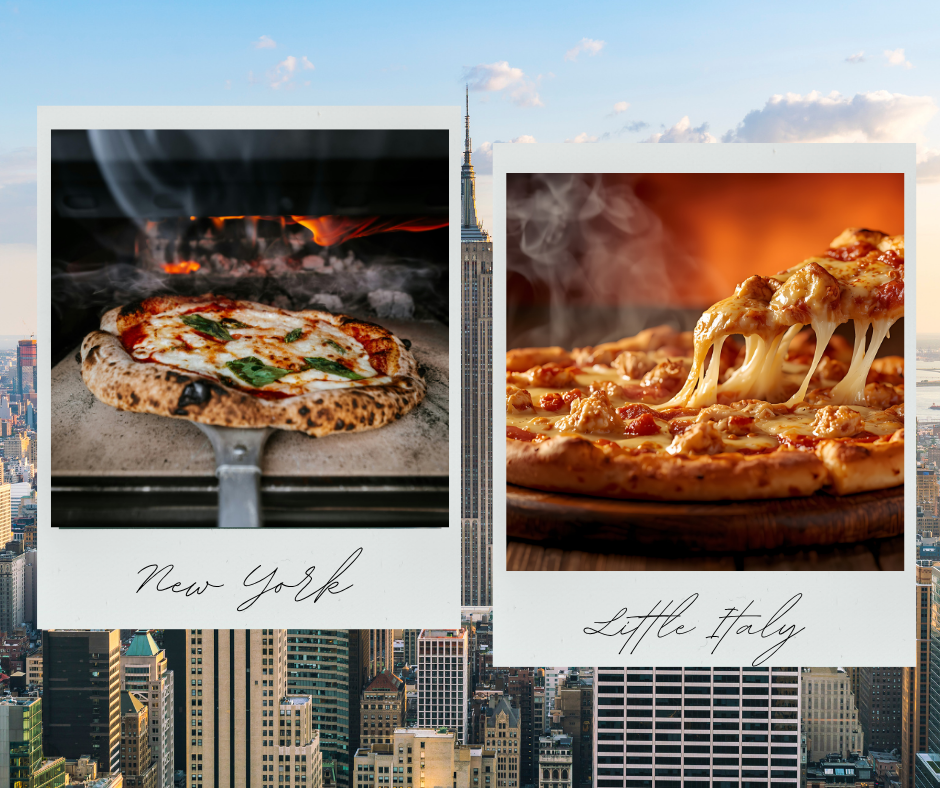
It’s quick, satisfying, and as much a part of everyday city life as yellow taxis and subway stations. Near Little Italy, you’ll find the famous Lombardi’s Pizza, widely recognized as one of America’s earliest documented pizzerias.
Its history dates back to 1905, when pizza was still far from the universally familiar food it is today. Now, it’s almost impossible to imagine New York without it.
And yet, there’s something fascinating about how a simple dish brought over by Italian immigrants eventually became one of the most recognizable symbols of American urban culture.
It’s a perfect example of how traditions travel, evolve, and become part of something new. That’s the beauty of New York.
The city doesn’t just collect cultures from around the world. It transforms them into something uniquely its own.
The City Built by a Million Different Stories
New York is often described as one of the world’s great melting pots. But I’ve always felt that expression doesn’t quite capture what makes the city so extraordinary.
Because its real beauty lies in the fact that its cultures haven’t completely melted into one another. They’ve retained pieces of their individual identities.
In Chinatown, traditional tea houses and family restaurants continue to serve dishes rooted in Chinese history. In Little Italy, old bakeries and specialty shops keep Italian traditions alive.
And just a few blocks away, entirely different flavors tell the stories of people who arrived from other parts of the world.
Behind every neighborhood is a collection of families, journeys, sacrifices, and new beginnings.
The more I travel, the more I realize that my most memorable discoveries rarely happen at the biggest or most famous attractions. They happen in the smaller moments. An old bakery where time seems to have stood still.
A family restaurant that has been preparing the same recipe for decades. Or an unfamiliar dish whose history suddenly reveals something unexpected about the city around me. And perhaps that’s what makes New York such a remarkable place to explore.
You don’t have to travel very far to experience the world. Sometimes, all it takes is a few city blocks, a cup of tea, a plate of freshly made dumplings, or a perfectly crisp cannoli.
By the time your walk comes to an end, you’ve discovered more than another neighborhood.
You’ve learned a little about the people who helped make New York the extraordinary city it is today. Because the true story of a city isn’t always found in museums, monuments, or history books.
Sometimes, it’s sitting right in front of you.
On a plate.
And all you have to do is take a bite.