

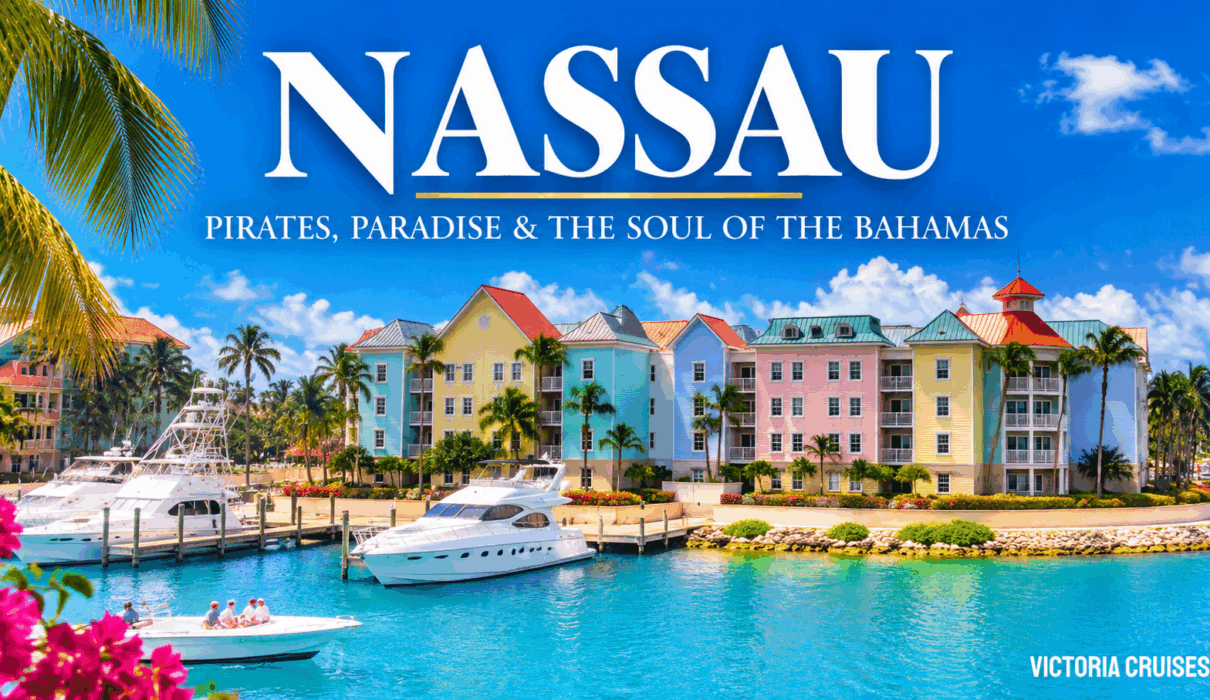
Where legendary pirates, colonial history and the vibrant spirit of the Caribbean come together.
Three hundred years ago, the harbour of Nassau was not filled with luxury yachts and cruise ships. Instead, it sheltered some of the most feared pirates in the Caribbean.Today, those same shores welcome travellers with turquoise waters, colourful colonial buildings, tropical landscapes and the unmistakable rhythm of Bahamian life. But Nassau’s greatest treasure is not hidden beneath the sea. It lies in the extraordinary stories, traditions and cultures that have shaped this remarkable island capital. As the first port of call on Victoria Cruises Line‘s extraordinary world voyage, Nassau offers the perfect introduction to a journey of discovery.
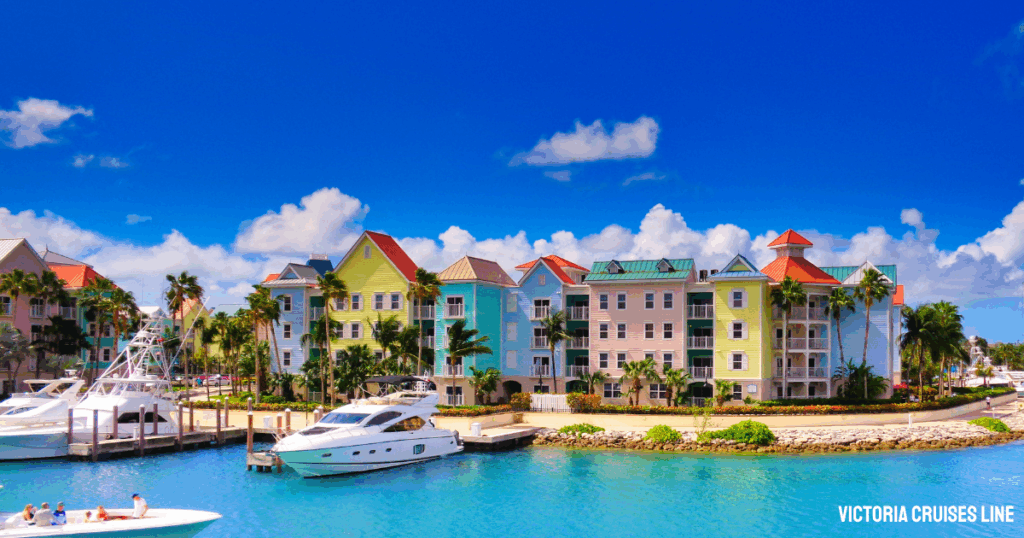
Nassau: When Pirates Ruled the Caribbean
In the early 18th century, Nassau was far from the peaceful tropical destination we know today.Its sheltered harbour, shallow surrounding waters and strategic position along important shipping routes made it an ideal refuge for pirates operating throughout the Caribbean and the Atlantic.Among the most notorious figures associated with Nassau were Edward Teach, better known as Blackbeard, Charles Vane and Benjamin Hornigold. These men did more than simply visit the island. Nassau became an important centre of pirate activity, where crews could repair their ships, trade stolen goods and prepare for their next adventures.
For a time, the settlement was so strongly associated with piracy that it became known as a pirate republic, although it was never a formally established independent state. Everything began to change in 1718, when British governor Woodes Rogers arrived with the mission of restoring royal authority.Some pirates accepted the king’s pardon, while others refused to surrender their freedom. Charles Vane famously escaped rather than submit to the new administration.
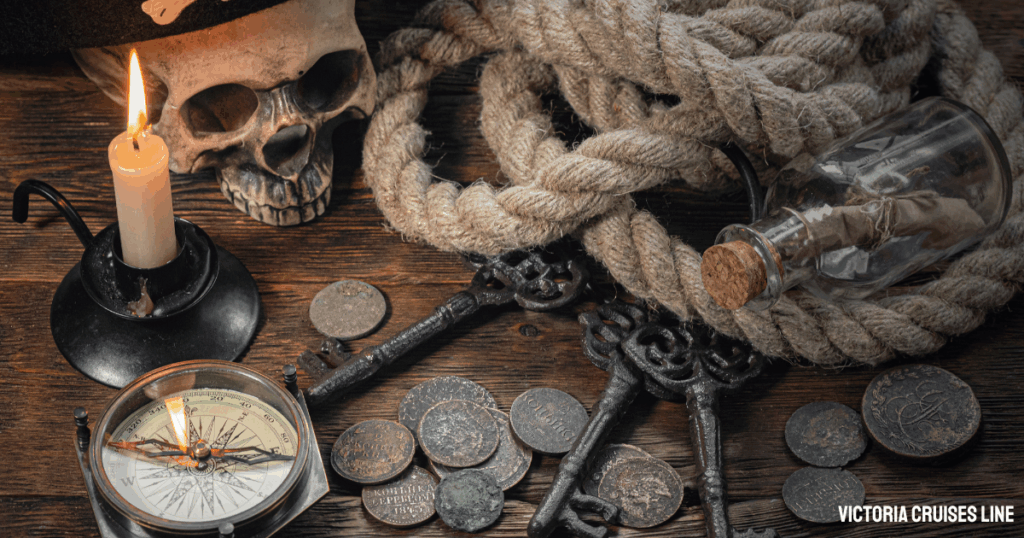
Today, visitors can explore this fascinating chapter of Bahamian history at the Pirates of Nassau Museum, where recreated pirate environments and historical exhibits bring the Golden Age of Piracy to life. Walking through modern Nassau, it is remarkable to imagine that these colourful streets once belonged to one of the most notorious maritime communities in the Atlantic.
The Queen’s Staircase: 66 Steps Through History
Hidden between towering limestone walls and lush tropical vegetation lies one of Nassau’s most atmospheric landmarks. The Queen’s Staircase is much more than a beautiful place to take photographs. It is a powerful reminder of the island’s complex past. Carved directly into solid limestone between 1793 and 1794 by enslaved people, the staircase originally provided a strategic passage between the city and Fort Fincastle.
Its original 66 steps later became associated with Queen Victoria, during whose reign slavery was abolished in most British colonies in 1834.Today, fewer steps remain visible because of subsequent changes to the surrounding roads. The staircase is surrounded by tropical greenery, creating a peaceful atmosphere that contrasts sharply with the difficult history of its construction. A short walk from the top leads to Fort Fincastle, built in 1793 to help protect Nassau from potential attacks. From this elevated position, visitors can enjoy views across the city and its harbour.
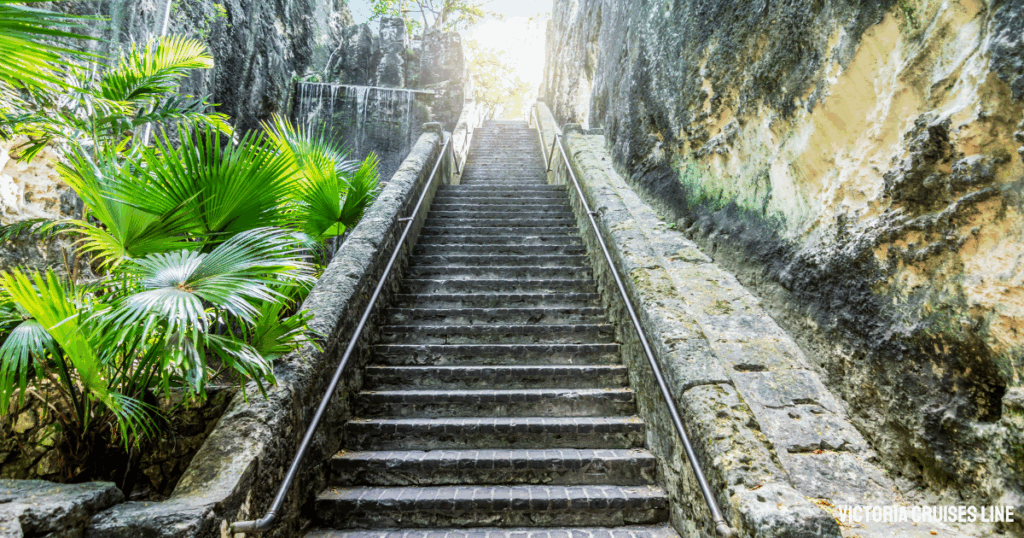
The Queen’s Staircase is one of those rare places where natural beauty and historical reflection come together.
Fort Charlotte: Guardians of a Colonial Past
Nassau’s history is also written into its impressive coastal fortifications. Fort Charlotte, the largest fort in the Bahamas, was constructed in the late 18th century during the governorship of Lord Dunmore. Named in honour of Queen Charlotte, wife of King George III, the fortress was designed to protect the western approaches to Nassau Harbour. Its stone walls, cannons, underground passages and former military chambers offer a fascinating glimpse into the island’s colonial past. Despite its formidable appearance, the fort never fired its cannons in battle.
Today, it stands as an important historical landmark and provides panoramic views of the surrounding coastline. Another worthwhile stop is Parliament Square, where distinctive pink colonial buildings reflect Nassau’s long association with British political traditions. Together, these landmarks reveal a city shaped by centuries of maritime trade, colonial ambition and cultural change.
Junkanoo: The Heartbeat of the Bahamas
To truly understand Nassau, visitors must look beyond its beaches and historical monuments.The soul of the Bahamas lives in its music, its people and its colourful cultural traditions.Few celebrations capture that spirit more vividly than Junkanoo.This spectacular Bahamian festival transforms the streets into a celebration of music, dance, creativity and community. Participants wear elaborate costumes decorated with vibrant colours, feathers and intricate handmade designs.
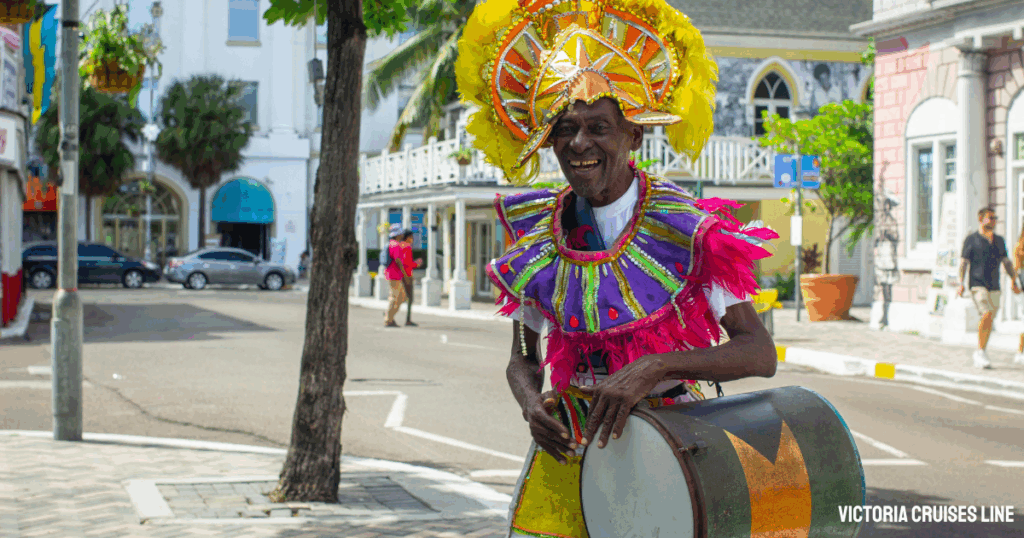
The powerful rhythms of goatskin drums, cowbells, whistles and brass instruments fill the air as groups parade through the streets. The most famous Junkanoo celebrations traditionally take place on Boxing Day and New Year’s Day. For Bahamians, however, Junkanoo is far more than entertainment. It is an expression of cultural identity, artistic pride and shared heritage. Even visitors arriving outside the festival season can discover aspects of this tradition through local cultural experiences. A visit to the Nassau Straw Market offers another glimpse into everyday island life. Here, stalls display woven straw bags, handmade baskets, hats, wood carvings and colourful souvenirs.
Taking the time to speak with local craftspeople and seek out authentically Bahamian products can turn a simple shopping stop into a meaningful cultural encounter.
A Taste of the Bahamas
Every destination has its own flavours, and Nassau is no exception. Bahamian cuisine combines fresh seafood, tropical ingredients and culinary traditions influenced by the islands’ history. One of the most distinctive local dishes is conch salad, made with fresh conch, citrus juice, tomatoes, onions, peppers and seasonings. The result is refreshing, colourful and full of Caribbean character. For a more authentic local dining experience, visitors should consider Arawak Cay, commonly known as the Fish Fry.
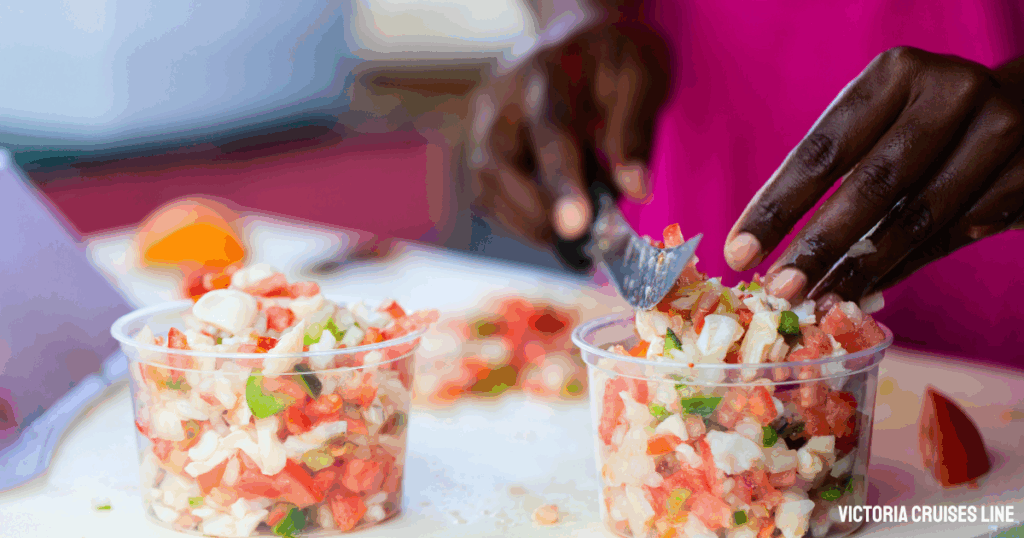
This lively waterfront area is home to restaurants and casual eateries serving traditional Bahamian specialities. Freshly prepared fish, conch fritters, cracked conch and local side dishes offer a delicious introduction to island cuisine. Unlike the polished dining rooms of luxury resorts, the Fish Fry has a relaxed, welcoming atmosphere. It is the kind of place where food, conversation and music become part of the same experience.
Sometimes the most memorable moments of travelling are not found at famous landmarks, but around a table enjoying a meal prepared according to local traditions.
Paradise Island: Another Side of Nassau
Just across the harbour from downtown Nassau lies Paradise Island, one of the Bahamas’ most famous resort destinations. Here, the atmosphere changes dramatically. Grand hotels, landscaped tropical gardens, luxury facilities and beautiful beaches create a world dedicated to relaxation and entertainment.
The island’s most recognisable landmark is Atlantis Paradise Island, an enormous resort complex known for its distinctive architecture, marine attractions and water park. For many visitors, Paradise Island represents the classic Caribbean dream: white sand, warm sunshine and impossibly clear turquoise water.
Yet its modern resort atmosphere offers only one side of the Bahamian experience. The greatest pleasure comes from discovering both worlds: the historic streets and cultural traditions of Nassau, followed by the natural beauty and leisurely atmosphere of Paradise Island.
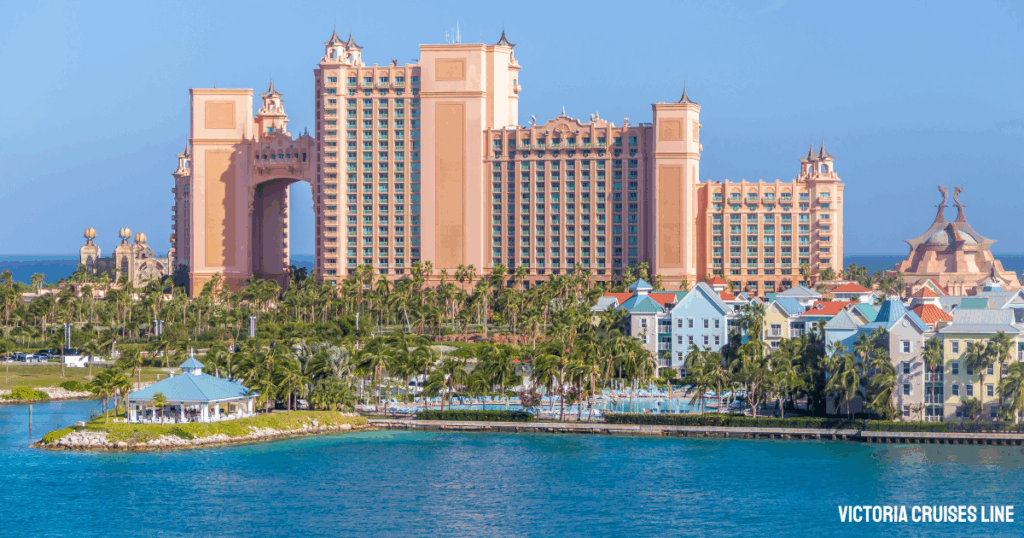
Together, they demonstrate the extraordinary diversity that can be found within a relatively small geographical area.
Exuma: Where Nature Creates the Extraordinary
Beyond Nassau lies another world of remarkable natural beauty. The Exuma islands are famous for their crystal-clear waters, brilliant white sandbars and spectacular shades of turquoise. The shallow seas surrounding the islands create extraordinary patterns of colour that often appear almost unreal.
One of the area’s best-known attractions is Big Major Cay, commonly called Pig Beach.
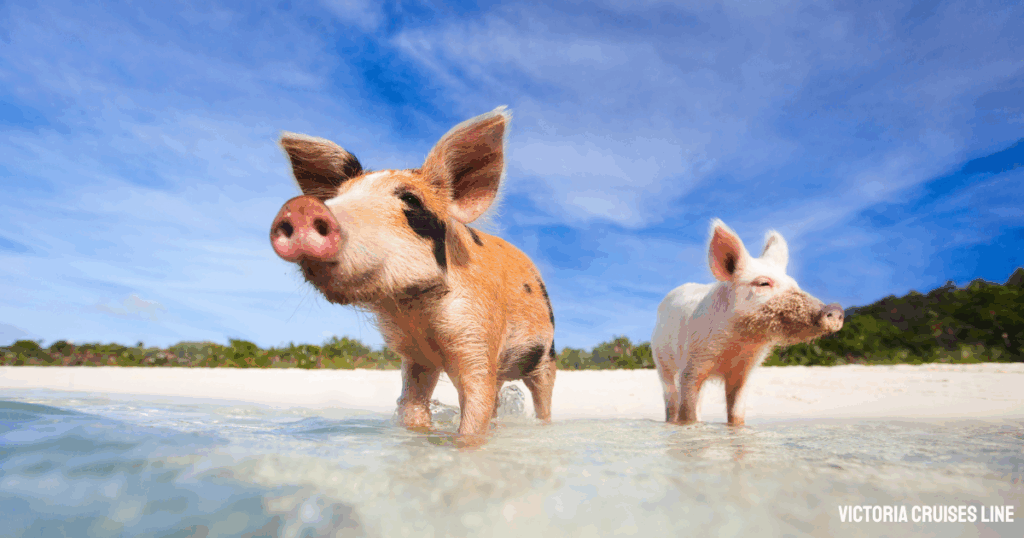
Here, visitors can encounter the famous swimming pigs that have made the island an internationally recognised attraction. Several stories attempt to explain how the animals originally arrived, although their exact origins remain uncertain. Today, organised excursions offer visitors the opportunity to experience this unusual destination. Responsible tourism is especially important. Visitors should follow local animal-welfare guidance, avoid forcing interactions and respect instructions about feeding.
Exuma is also considerably farther from Nassau than the city’s main attractions. Travellers planning an excursion should carefully check transport arrangements, tour duration and return times, particularly when visiting as part of a cruise itinerary.
For those with sufficient time, the Exuma islands reveal another remarkable dimension of the Bahamas: a landscape where the natural beauty of the Caribbean takes centre stage.
Discover Nassau: Experiences Worth Exploring
Nassau offers a wide variety of excursions, from historical walking tours to unforgettable adventures on the water. For travellers interested in history and culture, a guided city tour is an excellent introduction to Nassau’s colonial architecture, pirate heritage and traditional neighbourhoods. Those who prefer marine adventures can explore the surrounding waters on organised snorkeling excursions, discovering tropical fish and the island’s underwater environment.
For a more adventurous experience, selected tours to Exuma and Pig Beach offer an opportunity to visit one of the Bahamas’ most unusual attractions, provided the travel schedule allows sufficient time.
Nassau: The First Chapter of an Extraordinary World Voyage
Every great journey begins somewhere. For Victoria Cruises Line, Nassau marks the first destination on an extraordinary voyage around the world. It is a place where the legends of pirates meet the elegance of colonial architecture, where colourful cultural traditions fill the streets and where the Caribbean Sea reveals some of its most beautiful landscapes. But Nassau also represents something greater.
It reminds us that travelling is not simply about visiting famous destinations or collecting photographs. It is about understanding the stories behind the places we discover, meeting different cultures and experiencing the extraordinary diversity of our world.
As the ship leaves Nassau Harbour and the colourful buildings gradually disappear beyond the horizon, the adventure is only beginning. New destinations, new cultures and new discoveries are waiting.
And Nassau is just the first chapter.
Discover the world with Victoria Cruises Line.