

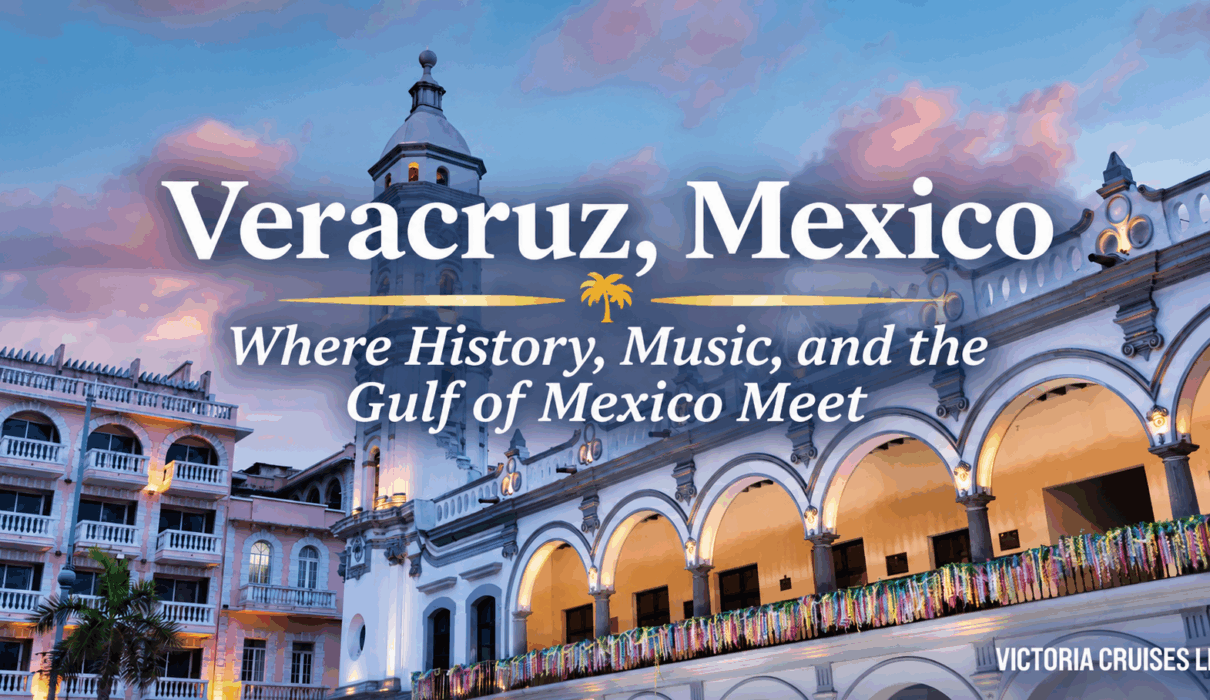
Veracruz, Mexico – Where History, Music, and the Gulf of Mexico Meet
Discover Mexico’s historic Gulf Coast port, where centuries-old fortresses, lively plazas, Afro-Caribbean rhythms, and unforgettable flavors reveal one of the country’s most fascinating cultural destinations.
Veracruz – The Soul of Mexico’s Gulf Coast
Some cities welcome travelers with beautiful beaches. Others captivate visitors with remarkable architecture or fascinating history. Veracruz offers something different: a combination of all three, accompanied by the unmistakable rhythms of Mexico’s Gulf Coast. Imagine walking through a lively colonial plaza, hearing music drift between colorful buildings, and watching ships arrive in a harbor that has connected Mexico with the wider world for more than five centuries.
Welcome to Veracruz.
Located on the Gulf of Mexico, Veracruz is one of the country’s most historically significant ports. Its streets tell stories of Spanish explorers, international trade, maritime battles, African heritage, and generations of people who shaped Mexico’s cultural identity. Yet Veracruz is far more than a historical destination.
It is a city of music, traditional cafés, extraordinary seafood, and a warm coastal atmosphere that invites visitors to slow down and experience everyday Mexican life. For travelers arriving by sea, Veracruz offers a particularly meaningful introduction to the history and culture of Mexico.

Where Mexico’s Colonial History Began
The history of Veracruz is closely connected to one of the most consequential events in the Americas. In 1519, Spanish conquistador Hernán Cortés established Villa Rica de la Vera Cruz, creating a settlement that became an important base for the Spanish conquest of Mexico.
The original settlement was not located in precisely the same place as today’s port city. Veracruz moved during its early colonial history before becoming established at its present location. Long before the Spanish arrived, however, the Gulf Coast was home to sophisticated Indigenous civilizations. The Olmec civilization flourished in the wider region centuries earlier, while Totonac communities played an important role in the area’s history during the period of Spanish contact.
As Spanish colonial rule expanded, Veracruz became a vital maritime connection between New Spain and Europe. Ships carried silver, agricultural products, manufactured goods, and people across the Atlantic. The port also became deeply connected to the transatlantic slave trade, through which enslaved Africans were forcibly brought to colonial Mexico.
Their descendants contributed profoundly to the region’s music, cuisine, language, and cultural traditions. Today, Veracruz’s identity reflects this complex history of Indigenous, European, and African influences. Understanding these connections makes exploring the city much more rewarding.
San Juan de Ulúa – The Fortress That Guarded a New World
Few landmarks capture Veracruz’s dramatic past as powerfully as San Juan de Ulúa. Built and expanded over several centuries on an island-like site near the harbor, this imposing fortress played a central role in defending one of Spain’s most valuable colonial ports. Its thick stone walls, defensive structures, and strategic position overlooking the Gulf of Mexico reflect the importance of Veracruz to the Spanish Empire.
San Juan de Ulúa served different purposes throughout its history. It functioned as a military fortress, a customs and maritime facility, and later a prison. Its history includes stories of colonial power, conflict, imprisonment, and Mexico’s struggle for independence. The fortress remained a Spanish stronghold after Mexican independence was declared in 1821, until its surrender in 1825.
Walking through its courtyards and passageways offers an opportunity to imagine the ships, soldiers, merchants, and prisoners who once passed through its gates. Today, San Juan de Ulúa is one of Veracruz’s most important historical attractions. Visitors should check current opening arrangements before planning a visit, as access and restoration work can affect particular areas.

Tip: El Tajín Tour
Tajin Day Trip with Vanilla Factory Visit
The Zócalo – Where Veracruz Comes Alive
If San Juan de Ulúa represents the city’s military history, the Zócalo reveals its living cultural heart. Veracruz’s central square, officially known as Plaza de Armas, is surrounded by historic buildings, restaurants, and cafés. The Veracruz Cathedral overlooks the square, while the surrounding streets preserve the atmosphere of an old port city.
During the day, visitors can explore the architecture, enjoy a coffee, and watch the rhythm of local life. As evening approaches, the atmosphere often becomes livelier. Music, conversation, and dancing have long been part of the square’s cultural identity.
One of the most recognizable traditions is danzón, an elegant social dance with Cuban roots that became especially popular in Veracruz. The music and graceful movements reflect the city’s close historical connections with the wider Caribbean. Spending time in the Zócalo is one of the simplest and most enjoyable ways to experience Veracruz. Rather than rushing between attractions, visitors can sit at a café and observe a city where history remains part of everyday life.
Son Jarocho – The Music That Tells Veracruz’s Story
Veracruz has a musical identity unlike almost anywhere else in Mexico. One of its most important traditions is son jarocho, a regional musical style shaped by Indigenous, Spanish, and African influences. Its distinctive sound features string instruments such as the jarana jarocha and requinto jarocho, rhythmic singing, and traditional dance. Performances often take place during gatherings known as fandangos, where musicians, singers, and dancers participate in a shared celebration. The rhythmic footwork of zapateado adds another layer of percussion to the music. Perhaps the world’s best-known example of this tradition is La Bamba.
Long before it became internationally famous through modern recordings, La Bamba was part of the musical heritage of Veracruz. The song’s history illustrates how a regional cultural tradition can eventually become recognized around the world. For visitors, experiencing live son jarocho music offers something more meaningful than ordinary entertainment. It is an opportunity to discover the cultural exchanges that shaped the Gulf Coast over centuries.
Tip: City Tour
The Malecón – A Walk Along the Waterfront
The Malecón, Veracruz’s waterfront promenade, is another essential part of the city. Here, visitors can enjoy views of the harbor, watch maritime activity, and experience the lively atmosphere of a working port. The waterfront is closely connected to Veracruz’s identity. For centuries, ships arriving from distant countries brought goods, travelers, ideas, and cultural influences to the city.
Today, the harbor remains an important part of Mexico’s commercial maritime network. The surrounding streets offer opportunities to browse local shops, admire historic architecture, and enjoy coastal views. The Malecón is particularly appealing for travelers who want to experience Veracruz without traveling far from the port area.
Veracruz Aquarium – Discovering Life Beneath the Gulf
The Gulf of Mexico is home to a remarkable variety of marine environments, from coastal wetlands to coral reefs and open-water ecosystems. Veracruz’s aquarium, commonly known as the Acuario de Veracruz, introduces visitors to aquatic life through exhibits featuring marine and freshwater species. It is one of the city’s best-known family attractions, although visitors should confirm current opening hours and exhibit availability before visiting.
Beyond the aquarium, the Veracruz Reef System National Park protects important coral reef ecosystems near the coast. These reefs provide habitats for fish, corals, and many other marine organisms. Their conservation is particularly important because coastal development, pollution, warming seas, and other environmental pressures threaten reef ecosystems worldwide.
For nature lovers, Veracruz offers an opportunity to learn about the ecological importance of the Gulf of Mexico as well as its human history.

Tip: Catemaco & Los Tuxtlas Visit with Boat Trip
Veracruz’s Culinary Heritage – Where Mexico Meets the Caribbean
Food is one of the most memorable ways to experience Veracruz. The region’s cuisine combines Indigenous Mexican ingredients with Spanish, African, and Caribbean culinary influences. Its coastal location has also made seafood central to many traditional dishes.
Huachinango a la Veracruzana
Perhaps the region’s most famous dish is huachinango a la veracruzana. Traditionally prepared with red snapper, it features a flavorful sauce commonly made with tomatoes, olives, capers, onions, and peppers. The combination of ingredients reflects the blending of Mexican and Mediterranean culinary traditions. The result is a dish that feels both distinctly Mexican and surprisingly international.
Arroz a la Tumbada
Another regional specialty is arroz a la tumbada, a seafood rice dish prepared with a rich, seasoned broth. Depending on the recipe, it may contain shrimp, fish, clams, or other seafood. Its generous flavors and coastal origins make it a wonderful introduction to Veracruz’s maritime food culture.
Picadas Veracruzanas
For a more casual local experience, try picadas, small, thick corn tortillas with raised edges, typically topped with salsa, cheese, onions, or other ingredients. They are especially popular for breakfast and offer a delicious example of everyday regional cooking. Veracruz’s cuisine is best appreciated slowly, whether in a traditional restaurant, a neighborhood café, or a lively local market.

Tip: 5 Attractions Tour with Aquarium and Boat Trip
Café de La Parroquia – A Veracruz Tradition
Few experiences capture the atmosphere of Veracruz as perfectly as enjoying a lechero coffee. One of the city’s most celebrated institutions is Gran Café de La Parroquia, famous for its traditional coffee service. The lechero combines strong coffee with hot milk, often poured from a height by an experienced server.
The theatrical presentation has become part of the city’s café culture. Traditionally, customers may tap their glasses with a spoon to attract the attention of the milk server. It is a simple ritual, but one that reflects the personality and social traditions of Veracruz. Coffee has a long history in the surrounding state, where mountainous growing regions produce beans valued for their aroma and flavor. The state is also closely associated with vanilla cultivation, particularly in the Papantla region. Together, coffee and vanilla reveal another fascinating chapter of Veracruz’s agricultural and cultural heritage.
Want to discover more about Veracruz’s extraordinary flavors? Explore our special feature, The Fascinating History of Coffee and Vanilla in Veracruz, and discover how these two remarkable products became part of Mexico’s cultural and culinary heritage.

Beyond the Port – Exploring the State of Veracruz
The city of Veracruz offers plenty to discover, but the wider state is also home to extraordinary landscapes, archaeological sites, and historic communities. These destinations deserve attention, although most require substantially more travel time than a short port visit allows.
El Tajín – An Ancient City of the Totonac Region
El Tajín is one of Mexico’s most remarkable archaeological sites and a UNESCO World Heritage Site. Located in northern Veracruz state near Papantla, it is famous for its distinctive architecture, particularly the Pyramid of the Niches. The ancient city flourished long before the arrival of the Spanish and reflects the sophisticated urban and ceremonial traditions of pre-Hispanic Mesoamerica.
Its plazas, ceremonial structures, and architectural details make it an important destination for travelers interested in archaeology. However, El Tajín is several hours from the port city by road and is best considered a separate excursion rather than a quick stop during a short cruise visit.
Xalapa – The Cultural Capital of Veracruz State
Xalapa, also spelled Jalapa, is the capital of Veracruz state. Situated inland at a higher elevation, it is known for its green surroundings, cultural institutions, and strong connection to the region’s coffee-growing traditions. One of its major attractions is the Museo de Antropología de Xalapa, which houses an important collection of archaeological artifacts, including monumental Olmec stone heads.
The museum offers valuable insight into the ancient civilizations of Mexico’s Gulf Coast. Xalapa makes an appealing destination for travelers with additional time to explore the state.
Catemaco – Lakes, Rainforests, and Local Traditions
Farther south, Catemaco is known for its large lake, lush tropical scenery, and distinctive local traditions. The surrounding Los Tuxtlas region contains important rainforest habitats and remarkable biodiversity. Catemaco also has a reputation for traditional spiritual and healing practices, which form part of the area’s cultural identity. Because of its distance from Veracruz city, it is better suited to a longer regional journey.
La Antigua – A Glimpse into Colonial History
Closer to Veracruz, La Antigua preserves important connections to the early colonial period. The community is associated with the history of the port’s development and includes landmarks linked to the Spanish presence in the region. Its historic church, riverside setting, and colonial-era remains make it an interesting excursion for travelers who want to explore beyond the modern city.
La Antigua is more practical for a shorter outing than destinations such as El Tajín or Catemaco, although transport and available time still need to be considered.
Discovering Veracruz During a Port Visit
For travelers arriving in Veracruz by ship, the historic center offers an excellent starting point. A well-planned visit can combine several of the city’s most distinctive experiences without requiring a long journey inland. Begin by exploring the waterfront and the historic streets surrounding the Malecón.
Continue to the Zócalo, where the cathedral, traditional cafés, and local atmosphere introduce visitors to the city’s cultural identity. Enjoy a lechero coffee and take time to appreciate the rhythm of everyday life.
Travelers interested in history may wish to visit San Juan de Ulúa, subject to opening hours and transport arrangements. For lunch, sample a traditional Veracruz seafood dish or local specialties such as picadas. Depending on the time available, the aquarium or a leisurely walk through the historic center can complete the day. Visitors planning more ambitious excursions should consider road distances, traffic, and the ship’s scheduled departure time. Veracruz rewards travelers who focus on a few meaningful experiences rather than attempting to see the entire state in a single day.
Veracruz – A City Where Cultures Meet
Veracruz is more than a historic port on the Gulf of Mexico. It is a place where the history of the Americas can be discovered through architecture, music, food, and everyday traditions. Its fortress recalls centuries of maritime trade and conflict. Its plazas preserve the rhythms of social life. Its music reflects the remarkable blending of Indigenous, African, and European influences. And its cuisine tells the story of a region shaped by both the land and the sea.
From the imposing walls of San Juan de Ulúa to the lively cafés of the Zócalo, Veracruz invites visitors to discover a Mexico that is deeply connected to its past yet full of contemporary energy. At Victoria Cruises Line, we believe that the most rewarding journeys reveal the stories behind the places we visit. Veracruz is one of those destinations.
A historic gateway to Mexico, a vibrant cultural crossroads, and a city whose spirit is as memorable as the Gulf Coast itself.
Discover more destinations and travel stories with Victoria Cruises Line.