

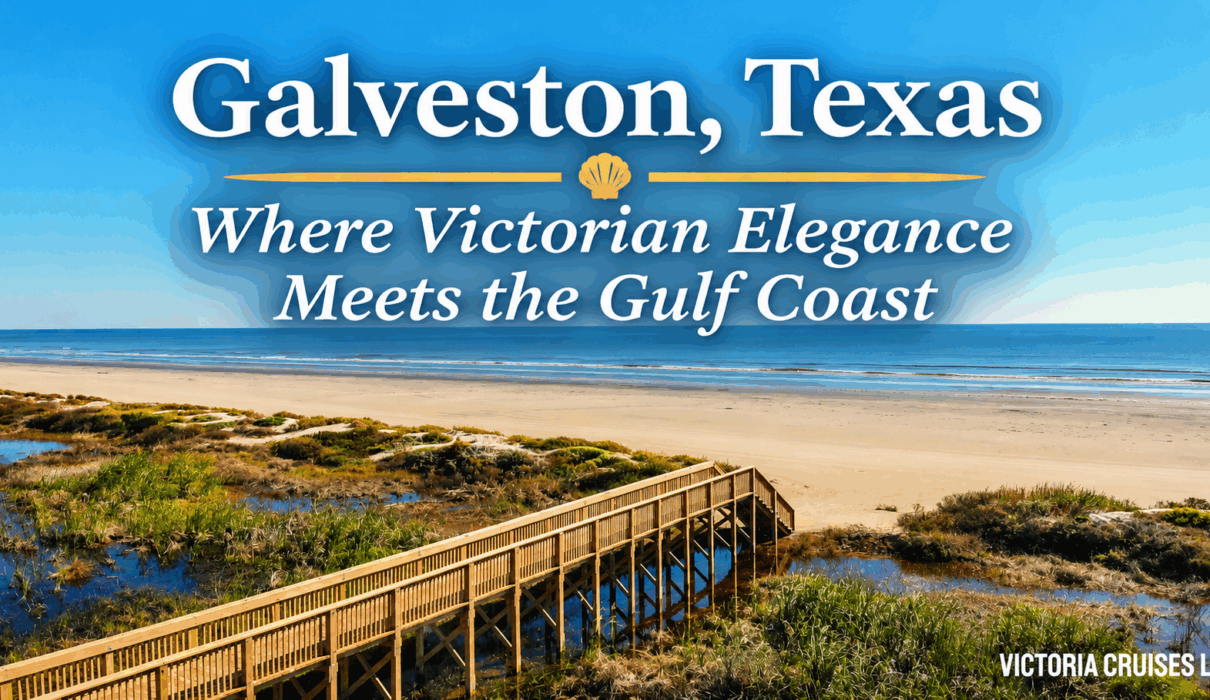
Discover the remarkable history, coastal beauty, Victorian architecture, and Southern flavors of one of Texas’s most fascinating island cities.
Galveston – An Island with a Thousand Stories
Some destinations are defined by their beaches. Others are remembered for their historic buildings, colorful neighborhoods, or extraordinary stories.
Galveston, Texas, brings all these elements together on a beautiful barrier island along the Gulf of Mexico. Imagine strolling through streets lined with elegant Victorian buildings, discovering a harbor that once connected Texas to the world, and listening to the waves rolling onto miles of sandy shoreline. Here, the past is never far away.
Galveston was once one of the wealthiest and most important ports in the American South. Its history includes maritime trade, immigration, architectural splendor, the struggle for freedom, and one of the most devastating natural disasters in United States history. Today, the island has reinvented itself as a destination where historical discovery and coastal relaxation go hand in hand.
For travelers arriving by ship, Galveston offers an opportunity to experience a distinctive side of Texas, where Southern hospitality, maritime traditions, and the spirit of the Gulf Coast meet.

From a Small Island to the Wall Street of the South
Long before Galveston became a thriving port, the island and surrounding coast were part of the homeland of Indigenous peoples, including the Karankawa. European exploration and competing colonial interests gradually changed the region. The island was named in honor of Bernardo de Gálvez, a Spanish military leader and colonial administrator, during the late eighteenth century. In the early nineteenth century, the island also became associated with privateers, including the notorious Jean Lafitte, who established a settlement here.
Following Texas’s independence from Mexico in 1836, Galveston developed rapidly as a commercial port. Its natural harbor and connections to inland trade routes helped transform it into a major center for cotton exports, shipping, finance, and international commerce. By the late nineteenth century, Galveston had become one of the most prosperous cities in Texas.
Banks, shipping companies, merchants, hotels, and elegant residences reflected its growing wealth. The city’s commercial importance earned it the nickname “Wall Street of the South.” Ships arrived from distant ports, carrying goods and immigrants who contributed to the development of Texas and the wider American West. Galveston became an important immigration gateway, sometimes described as a second Ellis Island. Many of the buildings constructed during this prosperous period still stand today, offering a fascinating glimpse into the island’s remarkable past.
The Great Storm of 1900 – A City Changed Forever
On September 8, 1900, Galveston’s history changed in a matter of hours. A powerful hurricane struck the island, bringing destructive winds and a catastrophic storm surge. At the time, Galveston was a low-lying coastal city with limited protection against the force of the Gulf. Water swept through neighborhoods, destroying homes, businesses, and public buildings. An estimated 6,000 to 8,000 people died in the city, making the disaster the deadliest natural catastrophe in United States history. Entire neighborhoods disappeared, and thousands of survivors were left homeless. The hurricane profoundly altered Galveston’s economic future, but the city’s residents were determined to rebuild. Their response became one of the most remarkable engineering achievements of its era.
Building the Galveston Seawall
Construction of a massive concrete seawall began in 1902. The first section was completed in 1904, creating a defensive barrier against future storm surges. Engineers also undertook an extraordinary project to raise the elevation of parts of the city. Thousands of structures were lifted while sand and other fill materials were placed beneath them. Streets, utilities, and public spaces were gradually elevated as part of this enormous undertaking. The project transformed Galveston’s physical landscape. Today, the Seawall is both an important coastal structure and one of the city’s most recognizable landmarks. Walking along it offers more than beautiful ocean views. It is a reminder of the resilience of a community that refused to disappear after tragedy.
Juneteenth – A Defining Moment in American History
Galveston holds a special place in the history of freedom in the United States. On June 19, 1865, Union Major General Gordon Granger arrived in Galveston and issued General Order No. 3, announcing that enslaved people in Texas were free. The announcement came more than two years after President Abraham Lincoln’s Emancipation Proclamation had taken effect in Confederate-held territories. Although the Civil War had ended, slavery had continued in Texas until federal authority could enforce emancipation.
The events of June 19 became the foundation of Juneteenth, a celebration commemorating the end of slavery and honoring African American freedom, history, and resilience. Over generations, Juneteenth grew from a Texas tradition into a nationally recognized observance. In 2021, it became a federal holiday in the United States.
Today, Galveston preserves this important history through commemorative sites, educational programs, and public celebrations. Visitors interested in learning more can explore landmarks connected to the original announcement, including locations in and around the historic downtown district. Juneteenth is not simply a chapter in Galveston’s local history. It is a defining part of the American story.

The Strand – Galveston’s Victorian Heart
Few places capture the elegance of nineteenth-century Galveston as beautifully as The Strand Historic District. Once the center of the island’s commercial life, this district is home to impressive buildings that reflect the wealth and ambition of Galveston’s golden age. Decorative facades, ironwork, historic storefronts, and carefully restored architecture create an atmosphere that feels remarkably different from the modern cities of Texas. Today, many of these buildings house boutiques, galleries, cafés, restaurants, and specialty shops. Walking along The Strand is one of the most enjoyable ways to discover Galveston. Visitors can admire the architectural details, browse local businesses, and imagine the merchants, sailors, and travelers who once filled these streets.
La King’s Confectionery
One of the district’s best-known attractions is La King’s Confectionery, a traditional candy shop that celebrates the atmosphere of an old-fashioned American sweet store. Its nostalgic surroundings and handmade treats make it a delightful stop during a downtown walk.
Dickens on The Strand
During the holiday season, Galveston hosts Dickens on The Strand, a festival inspired by the world of Charles Dickens and Victorian England. Costumes, entertainment, music, and historical atmosphere transform the district into a lively seasonal celebration. The event reflects Galveston’s affection for its architectural heritage and its ability to bring history into contemporary life.
Bishop’s Palace – A Masterpiece of Victorian Architecture
Among Galveston’s many historic residences, Bishop’s Palace stands out as one of the most extraordinary. Also known as the Gresham House, the mansion was completed in the late nineteenth century for prominent attorney and politician Walter Gresham and his family. Its elaborate stone exterior, towers, decorative carvings, stained glass, and richly detailed interiors demonstrate the craftsmanship and ambition of the Victorian era. The building combines architectural influences associated with the Romanesque Revival style.
Inside, the house reflects the tastes and lifestyle of Galveston’s wealthy residents during the city’s period of prosperity. Bishop’s Palace also survived the devastating hurricane of 1900, becoming an enduring symbol of the island’s architectural resilience. Today, the mansion offers visitors a fascinating opportunity to step into the world of nineteenth-century Galveston. For anyone interested in architecture, history, or decorative arts, it is one of the city’s essential attractions.
The Grand 1894 Opera House – A Stage That Survived History
Galveston’s cultural heritage is equally impressive. The Grand 1894 Opera House opened in 1894, during the island’s prosperous Victorian era. Its elegant auditorium and historic architecture reflect a period when theaters and opera houses were important centers of social and cultural life. The building survived the 1900 hurricane and continued to play an important role in the city’s entertainment history. Today, The Grand remains an active performing arts venue, presenting concerts, theatrical productions, and other performances. Even for visitors who cannot attend a show, the building represents an important part of Galveston’s cultural identity. Its history demonstrates that the island’s prosperity was never limited to shipping and commerce. Art, music, and theater were also essential parts of life in this remarkable port city.

Tip: Visit the Opera House here
Pier 21 – Discovering Galveston’s Maritime Heritage
Galveston’s waterfront has always been central to its identity. Pier 21, located near the historic harbor, offers an introduction to the city’s maritime history.
The surrounding area features waterfront dining, harbor views, and attractions connected to Galveston’s past. One of the most fascinating maritime landmarks is the historic sailing ship Elissa. Built in 1877, Elissa is a restored nineteenth-century tall ship preserved as part of Galveston’s maritime heritage. The vessel offers visitors an opportunity to learn about traditional sailing, maritime commerce, and the lives of sailors who traveled the world’s oceans. Galveston’s harbor also reflects the island’s importance as a modern cruise destination. For travelers arriving by ship, the historic waterfront and downtown district are among the most convenient areas to begin exploring. The exact walking distance depends on the cruise terminal used, so passengers should confirm their arrival location before planning their day.

Tip: Dolphin-Watching Boat Tour
Extra Tip: Pier 21 is just a few steps away from the Galveston Cruise Terminal.
Galveston Seawall – Where History Meets the Ocean
The Galveston Seawall is much more than an engineering landmark. Today, it is also one of the island’s most popular places for walking, cycling, and enjoying the coastal scenery. The long waterfront boulevard offers views across the Gulf of Mexico, with sandy beaches stretching along the shoreline. Restaurants, shops, and recreational attractions create a lively seaside atmosphere. Visitors can enjoy the ocean breeze, watch the waves, or simply relax while taking in the horizon. The Seawall is particularly appealing to travelers who want to combine a little history with a traditional beach experience. It also offers a powerful reminder of the relationship between Galveston and the sea. The Gulf has brought prosperity, opportunity, and beauty to the island, but it has also shaped its history through powerful storms.
Pleasure Pier – Classic American Seaside Entertainment
For a different kind of coastal experience, the Galveston Island Historic Pleasure Pier brings the atmosphere of a traditional American amusement pier to the Gulf Coast. Extending over the water, the pier features amusement rides, games, and dining. Its colorful attractions contrast with the quiet elegance of Galveston’s Victorian streets. The Pleasure Pier reflects the island’s long history as a seaside recreation destination. Visitors looking for a relaxed coastal afternoon can combine a walk along the Seawall with views of the pier and nearby beaches. Ride availability and admission arrangements may vary, so checking ahead is advisable.
Beaches, Nature, and the Island’s Wild Side
Galveston is not only a destination for history enthusiasts. Its coastal environment offers a wide variety of outdoor experiences. The island’s beaches attract visitors throughout the year, while its wetlands, marshes, and coastal habitats provide important environments for birds and other wildlife.
East Beach
East Beach is known for its broad shoreline and lively recreational atmosphere. It is a popular destination for beach activities and seasonal events.
Stewart Beach
Stewart Beach offers another accessible seaside setting, with amenities that may vary according to the season. It is a convenient option for travelers seeking a traditional beach day.
Galveston Island State Park
For nature lovers, Galveston Island State Park offers a quieter experience. The park protects coastal habitats and provides opportunities for walking, birdwatching, fishing, and enjoying the natural landscape. The area is particularly interesting because Galveston lies along important migratory bird routes. During migration seasons, birdwatchers may encounter a wide variety of species passing through the Gulf Coast. These natural environments reveal a side of Galveston that is very different from its busy historic downtown.
Moody Gardens – A Different Side of Galveston
Another well-known attraction is Moody Gardens, a large educational and entertainment complex on the island. Its distinctive pyramid-shaped buildings house attractions focused on marine life, tropical environments, and science-related experiences. The complex offers a combination of educational exhibits and recreational activities. For travelers with additional time, it provides an alternative to the historic district and beachfront. However, Moody Gardens is located away from the downtown cruise terminals, so transportation and available visiting time should be considered.

Tip: Ghost-Themed Walking Tour
The Flavors of Galveston – Seafood and Southern Traditions
No visit to Galveston would be complete without discovering its culinary heritage. The island’s cuisine reflects its coastal location and the broader traditions of Texas, Louisiana, and the American South. Fresh seafood plays an important role, but Galveston’s food culture also includes Cajun and Creole influences, Southern comfort food, and classic Texas flavors.
Gulf Shrimp
Shrimp has long been an important part of the Gulf Coast’s fishing economy. In Galveston, shrimp may be served grilled, fried, boiled, or incorporated into rich seafood dishes. The variety of preparations reflects the area’s long maritime and culinary traditions.
Fresh Oysters
Oysters are another familiar part of Gulf Coast cuisine. They may be served raw, grilled, or baked with flavorful toppings. As with all seafood, seasonal availability and harvesting conditions can affect what restaurants offer.
Gumbo
Gumbo is a rich, comforting dish strongly associated with Louisiana’s culinary traditions but also enjoyed throughout the Gulf Coast. Depending on the recipe, it may contain seafood, sausage, chicken, vegetables, and a deeply flavored broth. Its roots reflect the diverse African, European, and Indigenous influences that shaped Southern cooking.
Texas Barbecue
Although Galveston is best known for seafood, Texas barbecue is another essential part of the regional culinary experience. Slow-smoked brisket, ribs, and traditional side dishes offer a taste of one of the state’s most celebrated food traditions.
Southern Desserts
To finish a meal, visitors may enjoy classic Southern desserts such as pecan pie, bread pudding, or other locally prepared sweets. Galveston’s dining scene provides a wonderful opportunity to experience the meeting of coastal ingredients and Southern hospitality.
Ghost Stories and Galveston’s Mysterious Past
Galveston’s historic buildings and dramatic past have also inspired a rich tradition of ghost stories. The island is known for walking tours that combine local legends with stories of nineteenth-century life, maritime history, and the 1900 hurricane. Historic hotels, old residences, and downtown streets often feature in these tales. Although the supernatural elements belong to folklore rather than established history, the stories offer an entertaining way to explore Galveston’s older neighborhoods. For visitors interested in atmospheric evening activities, a historical ghost walk can provide a different perspective on the island.
Exploring Galveston During a Cruise Port Visit
Galveston is particularly rewarding for travelers who want to discover a destination without spending their entire day traveling between attractions. The historic downtown district and waterfront provide a convenient starting point. Begin with a walk through The Strand, where restored Victorian buildings reveal the city’s prosperous past. Continue toward Pier 21 to discover Galveston’s maritime heritage and enjoy views of the harbor. Depending on available time, visitors may wish to explore a museum or learn more about Juneteenth at one of the city’s commemorative sites. Those interested in architecture can arrange transportation to Bishop’s Palace or admire the historic Grand 1894 Opera House. For a more relaxed afternoon, the Seawall offers coastal views, restaurants, and access to the beach. Travelers who want to visit Moody Gardens, Galveston Island State Park, or more distant beaches should plan transportation in advance. The best itinerary depends on the ship’s arrival and departure schedule, the location of the terminal, and individual interests. Galveston is a destination where even a relatively short visit can reveal an extraordinary amount of history.
Galveston – A Texas Island That Never Lost Its Spirit
Galveston is much more than a beach destination. It is a city shaped by ambition, prosperity, tragedy, resilience, and the continuing importance of its maritime heritage. Its Victorian buildings recall an era when Galveston stood among the most influential ports in the American South. Its Juneteenth history connects the island to one of the most significant milestones in the struggle for freedom in the United States. Its Seawall tells the story of a community that rebuilt after unimaginable destruction. And its beaches, restaurants, and waterfront attractions reveal the lively coastal destination that Galveston has become today.
From the elegant streets of The Strand to the open waters of the Gulf of Mexico, Galveston invites travelers to discover a place where history and modern coastal life exist side by side. At Victoria Cruises Line, we believe that every port has a story worth discovering.
Galveston’s story is one of the most remarkable along America’s Gulf Coast.
Continue exploring the world’s fascinating destinations and cultural traditions with Victoria Cruises Line.