

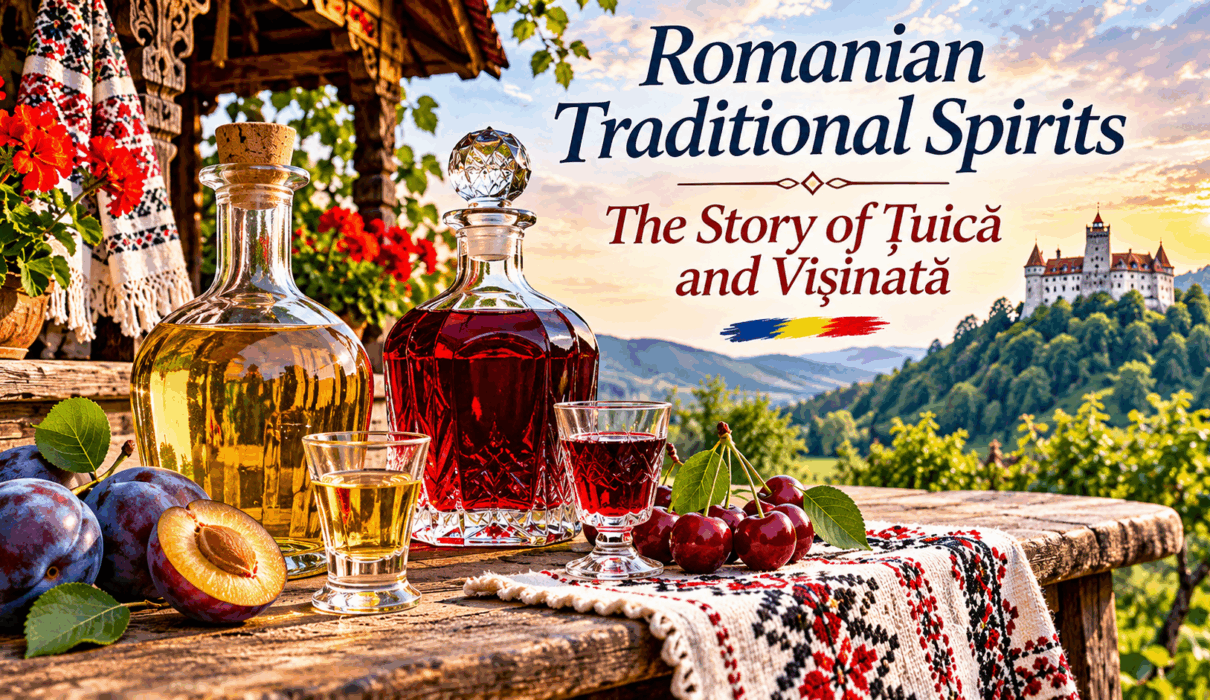
From the plum orchards of Transylvania to homemade sour cherry liqueurs, discover two traditional drinks that tell the story of Romanian hospitality.
A Taste of Romanian Tradition
Imagine a small village in the Romanian countryside on a crisp autumn morning. The orchards are heavy with ripe plums, the air carries the scent of woodsmoke, and families are preparing for a tradition that has been passed down through generations.
In Romania, making traditional spirits is about much more than producing a drink. It is part of rural life, family heritage, and the pleasure of welcoming guests.
Two drinks capture this spirit particularly well: țuică, Romania’s famous plum brandy, and vișinată, a sweet, ruby-red sour cherry liqueur.
Although very different in character, both have earned a special place in Romanian homes and celebrations. And behind every glass lies a story of patience, tradition, and hospitality
Țuică – The Spirit of the Romanian Countryside
For generations, țuică has been one of Romania’s most recognisable traditional drinks. Made from fermented plums, this fruit spirit is particularly associated with the country’s rural regions, where plum trees have long been a familiar feature of the landscape.
The process begins with ripe fruit, harvested when its natural sugars have developed. The plums are crushed and left to ferment before the resulting mixture is distilled. Traditional production often involves copper stills, with techniques and recipes passed from one generation to the next. The finished spirit can vary considerably in strength and flavour, depending on the fruit, the distillation process, and regional customs.
Some versions are clear and intensely aromatic, while others are aged in wooden barrels, developing a warmer colour and more rounded character. In regions such as Transylvania and Maramureș, fruit distillation remains closely connected with local identity.
Travellers may also encounter names such as pălincă and horincă. These reflect related regional distilling traditions, although they should not simply be treated as interchangeable names for every type of țuică. What makes these spirits interesting is not only their strength but also the craftsmanship and cultural history behind them.

More Than a Drink: The Meaning of Hospitality
In many Romanian households, offering a small glass of homemade spirit has traditionally been a gesture of welcome. It might appear at the beginning of a family celebration, during a holiday gathering, or when relatives and friends visit. The ritual is simple, but its meaning runs deep. A carefully prepared drink represents the work of the household, the generosity of the host, and the pleasure of sharing something made with care.
Traditional spirits are also associated with weddings, Christmas celebrations, and other important occasions. In this sense, țuică is more than a local speciality. It is part of the social fabric of Romanian life.

Vișinată – The Sweet Taste of Summer
If țuică represents the strength and character of Romania’s countryside, vișinată reveals its sweeter side. This traditional sour cherry liqueur is known for its beautiful deep-red colour, fruity aroma, and rich flavour. Unlike distilled plum spirits, vișinată is generally prepared by macerating sour cherries with sugar and alcohol.

The ingredients are left together for weeks or months, allowing the fruit to release its flavour and colour. The result is a fragrant liqueur that balances sweetness with the natural tartness of sour cherries. Many families have their own preferred recipe. Some use different proportions of fruit and sugar, while others adjust the alcohol or the length of maceration to achieve a particular flavour.
These small differences give homemade vișinată much of its charm. It is a drink shaped by family preferences rather than a single universal recipe.

A Tradition Preserved in Glass Bottles
One of the most appealing aspects of vișinată is its connection with the seasons. Sour cherries ripen during the warmer months, when families traditionally prepare preserves, jams, syrups, and homemade liqueurs. The fruit is carefully selected, mixed with sugar, and left to develop its flavour. As the weeks pass, the liquid gradually takes on its distinctive ruby-red colour.
By autumn or winter, the finished liqueur can become part of a family gathering or festive meal. For many households, opening a bottle is a reminder of the summer harvest. It brings together two pleasures: preserving seasonal flavours and sharing them with others. Vișinată is often served in small glasses and enjoyed slowly, allowing its fruit aromas to unfold. It can also accompany desserts, particularly those featuring chocolate or fruit.
From Transylvania to Maramureș: Regional Flavours
Romania’s traditional drinks are closely connected with its diverse regional cultures. Transylvania, with its historic towns, wooded hills, and agricultural traditions, is particularly well known for fruit-based spirits. Maramureș, in northern Romania, has a strong reputation for traditional distillation and the preservation of rural customs. Here, wooden houses, historic churches, and family farming traditions form part of a cultural landscape that has attracted travellers for generations. Other regions have their own preferences and local recipes. The ingredients may be similar, but preparation methods, serving traditions, and family customs can differ from village to village.
This regional diversity is one of the pleasures of exploring Romanian gastronomy. There is rarely just one way to prepare a traditional speciality. Instead, each region adds something of its own.
The Romanian Table: Food, Family, and Celebration
Traditional Romanian drinks are best understood as part of the country’s wider food culture. Romanian cuisine is generous, comforting, and deeply influenced by its agricultural heritage. A family table might include sarmale, cabbage leaves stuffed with meat and rice; mămăligă, a traditional cornmeal dish; or ciorbă, one of the country’s many varieties of sour soup. At celebrations, these dishes are often accompanied by long conversations, music, and the pleasure of spending time together.
A small glass of țuică may be offered before a meal, while vișinată can appear later as a sweet conclusion. Of course, customs vary between households, and neither drink is essential to experiencing Romanian hospitality. What matters most is the tradition of gathering around the table. In Romania, food and drink often serve as a way of bringing generations together.
Discovering Romania Beyond the Familiar
Romania offers travellers far more than its best-known castles and medieval towns. Its countryside is filled with traditional villages, orchards, local markets, and regional food customs that reveal a different side of the country. In Transylvania, historic settlements and mountain landscapes provide a fascinating setting for discovering traditional cuisine. In Maramureș, rural architecture and long-established crafts offer a glimpse into cultural traditions that remain important today.
Along the Black Sea coast, cities such as Constanța introduce visitors to another dimension of Romanian history, shaped by maritime trade and centuries of cultural exchange. Exploring these places through their food and traditions can be just as rewarding as visiting their famous landmarks. Sometimes, understanding a country begins with something as simple as a local speciality and the story behind it.
Two Drinks, One Cultural Heritage
Țuică and vișinată could hardly be more different. One is a powerful fruit spirit rooted in the tradition of plum distillation. The other is a sweet, fragrant liqueur that preserves the flavour of sour cherries. Yet both reflect the same values: patience, craftsmanship, family tradition, and the pleasure of sharing. They remind us that a country’s culinary heritage is not defined only by elaborate recipes or celebrated restaurants. It also lives in ordinary kitchens, seasonal harvests, and traditions passed quietly from one generation to another.
For travellers interested in authentic food culture, these details often become the most memorable discoveries. Because sometimes, the most fascinating stories of a destination are found not in its monuments, but around its dining tables.
Explore the World’s Culinary Traditions with Victoria Cruises Line
At Victoria Cruises Line, we believe that discovering the world means experiencing its cultures, traditions, and flavours. From the historic ports of Europe to the extraordinary destinations of Africa, Asia, and beyond, every region has stories waiting to be discovered. Romania’s traditional spirits offer just one example of how food and drink can reveal the character of a place. And for curious travellers, these small cultural discoveries are often what make a journey truly unforgettable.
Discover more about our residential cruising lifestyle at victoria.cruises.