

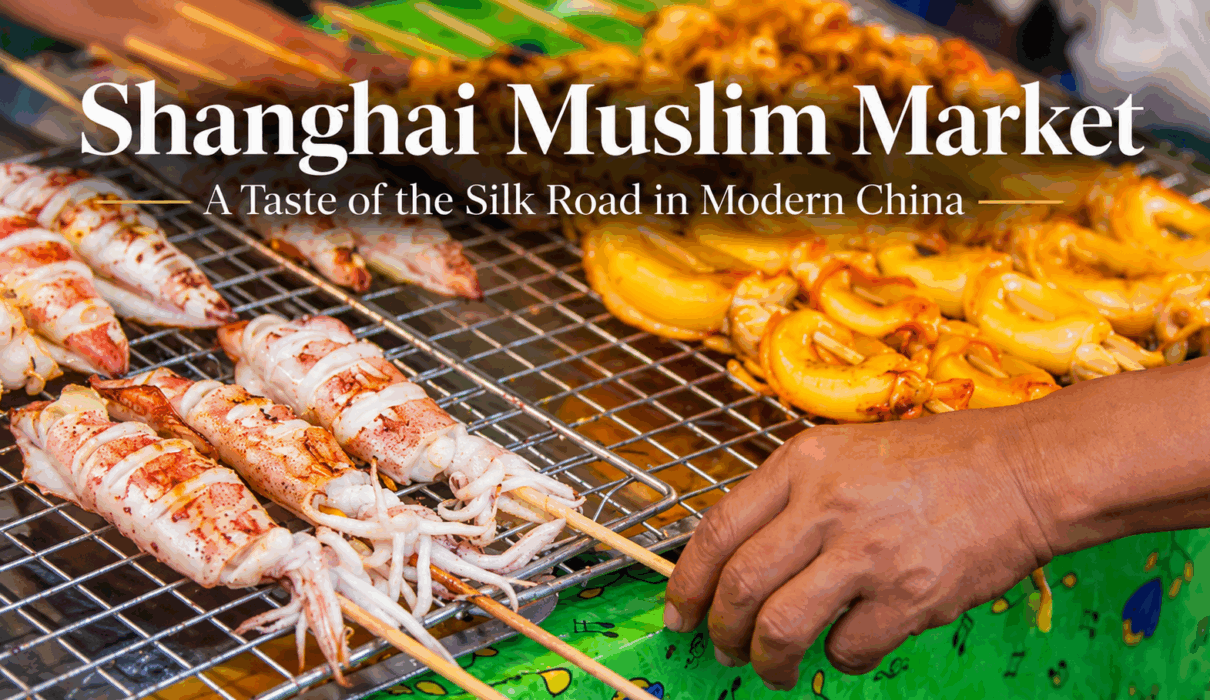
Shanghai Muslim Market – A Taste of the Silk Road in Modern China
Discover one of Shanghai’s most fascinating food traditions, where sizzling lamb skewers, freshly baked bread and centuries of Chinese Muslim heritage reveal a different side of the city.
Shanghai is a city of extraordinary contrasts. Along the Bund, magnificent colonial-era buildings overlook the futuristic skyscrapers of Pudong. Neon-lit shopping streets compete for attention with peaceful gardens, traditional temples and neighbourhoods where daily life follows a slower rhythm. Yet beyond the famous skyline and luxury shopping districts lies another Shanghai, one that many international visitors never discover.
On Fridays, near the Huxi Mosque on Changde Road, a remarkable culinary tradition brings together members of the city’s Muslim communities, local food lovers and curious travellers. The Shanghai Muslim Market is not simply a place to eat. It is a window into China’s cultural diversity, a meeting point of traditions and a reminder that the ancient connections of the Silk Road continue to influence everyday life. Here, the aroma of cumin-spiced lamb rises from charcoal grills, bakers prepare golden flatbreads, and families gather around dishes whose origins lie far beyond China’s eastern coastline.
For travellers willing to explore beyond the usual tourist attractions, this is one of Shanghai’s most intriguing cultural experiences..

A Different Side of Shanghai
When most people imagine Chinese cuisine, they think of dumplings, noodles, rice dishes and regional specialities. But China’s culinary traditions are far more diverse than any single menu could suggest. Across the country, different ethnic communities have developed distinctive cuisines shaped by geography, religion, trade and centuries of cultural exchange.
Among them are China’s Muslim communities, whose food traditions reflect both Chinese culinary influences and connections with Central Asia. The Friday market near Huxi Mosque offers a particularly memorable introduction to these traditions. Unlike a permanent shopping district, the market has historically been associated with the weekly gathering around Friday prayers.
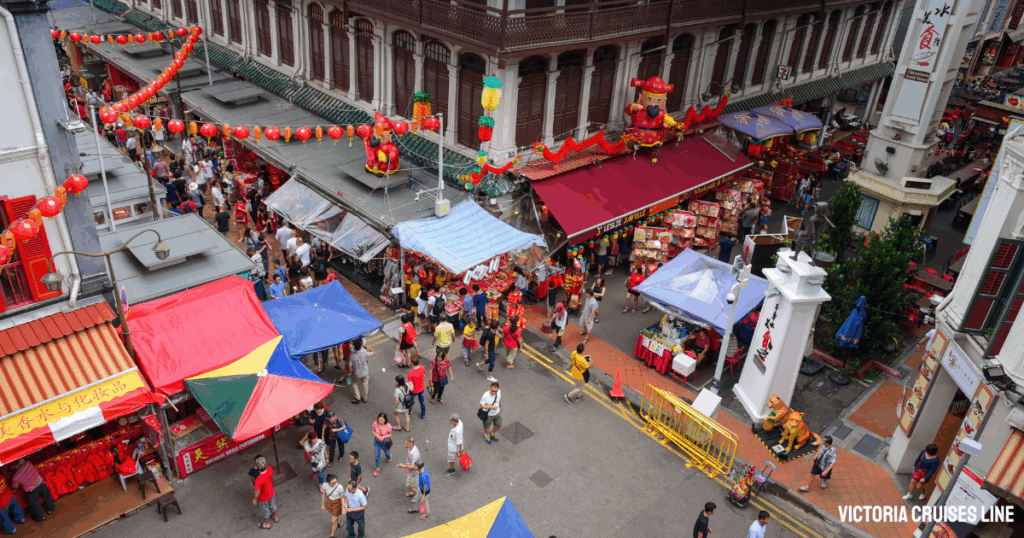
Food vendors and visitors come together in a lively atmosphere where eating, conversation and community life are closely connected. It is an experience that feels remarkably different from Shanghai’s famous commercial streets.
The Silk Road and the Arrival of Islam in China
To understand the cultural significance of Shanghai’s Muslim food traditions, we must travel back more than a thousand years. During the Tang dynasty, China maintained extensive commercial connections with Central Asia, Persia and the Arab world. Merchants travelled along the Silk Road, exchanging silk, ceramics, spices, textiles and countless other goods.
These trading networks carried more than merchandise. They also encouraged the movement of ideas, languages, religious beliefs and culinary traditions. Muslim merchants and travellers gradually established communities in different parts of China, contributing to the country’s long and complex history of cultural exchange. Over subsequent centuries, Muslim populations developed in several regions, including northwestern China and major commercial centres. Today, China is home to a number of Muslim ethnic communities, including the Hui and Uyghurs.
The Hui are a Chinese-speaking ethnic group with longstanding Muslim traditions and communities across the country. The Uyghurs are a Turkic-speaking ethnic group whose cultural heritage is strongly associated with Xinjiang in northwestern China. Although these communities have different histories, languages and cultural traditions, their cuisines share certain features, including the importance of halal food preparation.
The Shanghai Muslim Market offers visitors an opportunity to encounter some of these culinary influences far from their original regional settings.
Huxi Mosque: The Heart of the Friday Market
The market is closely associated with Huxi Mosque, also known as Shanghai’s West Mosque. Located on Changde Road in Putuo District, the mosque serves as an important religious and community gathering place. The present mosque complex was established at this location in the 1990s, continuing the history of an earlier Muslim place of worship in western Shanghai. Its architectural features include domes and a minaret, distinguishing it from many of the surrounding urban buildings.
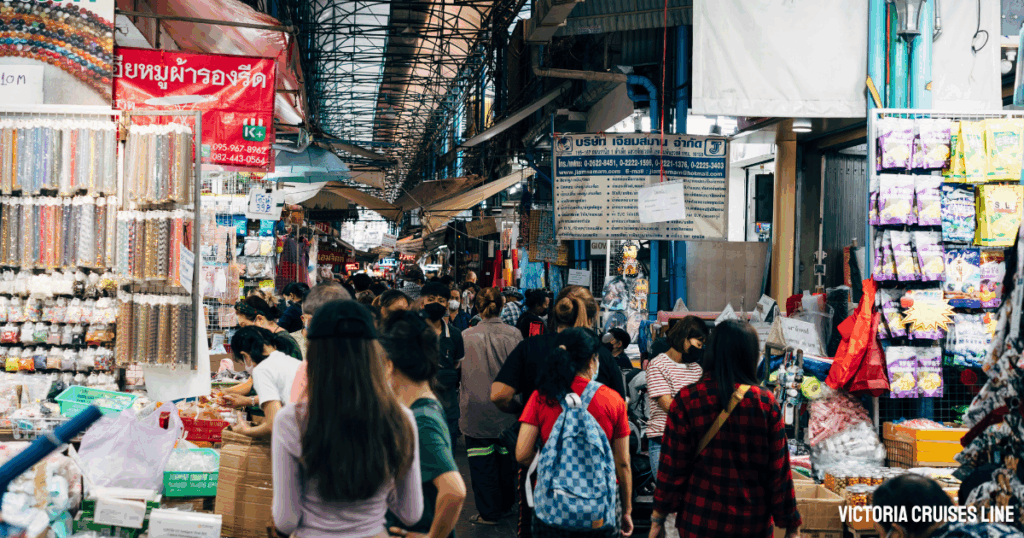
On Fridays, the mosque becomes a focal point for communal prayer. Historically, this weekly gathering helped create the distinctive food market outside and around the mosque. Vendors offered traditional dishes, families gathered for meals, and the surrounding streets became a meeting place for people from different backgrounds. The outdoor market was interrupted during the COVID-19 period. More recent visitor reports indicate that Friday food stalls have returned, although the number of vendors and operating arrangements can vary. For travellers, the most important thing to understand is that this is a living community tradition rather than a conventional tourist attraction with guaranteed daily opening hours.
The Aromas of Xinjiang: Where Food Tells a Story
One of the most memorable features of the Shanghai Muslim Market is its food. Many dishes reflect the culinary traditions of Xinjiang, a vast region in northwestern China where Central Asian influences are particularly strong.
Unlike the sweet and delicate flavours often associated with traditional Shanghai cuisine, these dishes frequently feature lamb, cumin, chilli, wheat-based breads and hearty rice preparations.
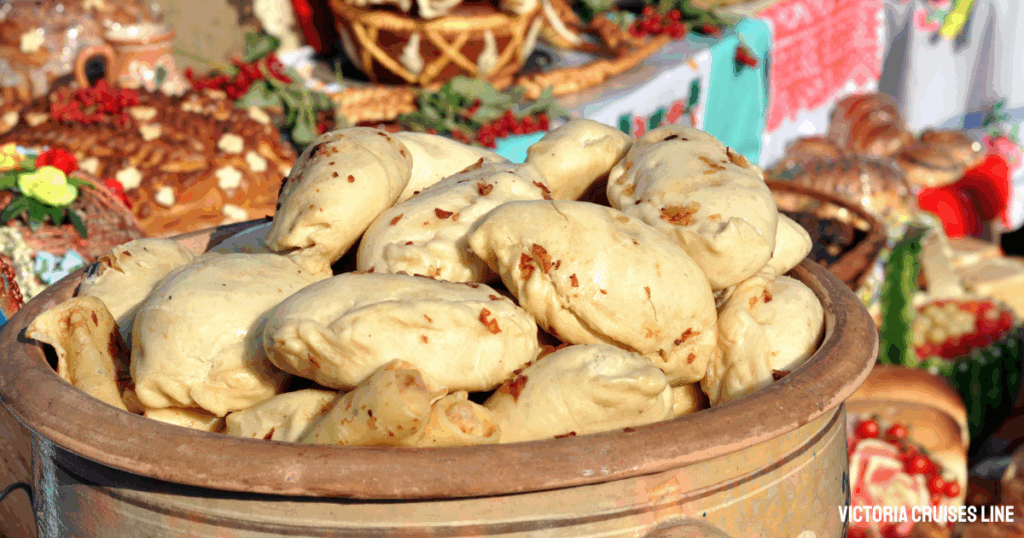
The result is a culinary experience filled with rich aromas and bold flavours.
Lamb Skewers: The Irresistible Aroma of Cumin
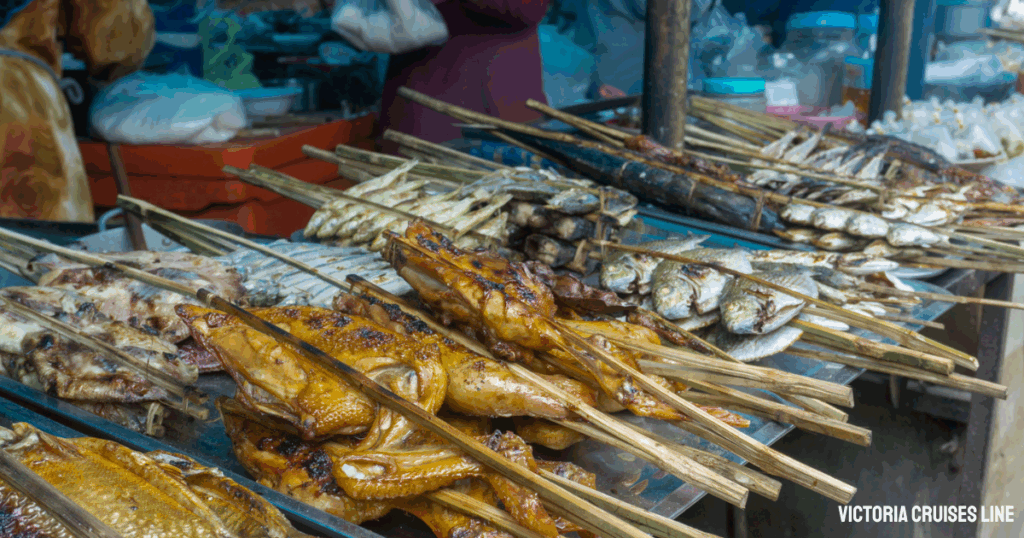
Perhaps the most recognisable food associated with the market is the grilled lamb skewer, known in Chinese as yangrou chuan. Pieces of lamb are threaded onto skewers, seasoned with cumin, chilli and other spices, and cooked over hot charcoal. As the meat grills, smoke carries the unmistakable aroma of roasted spices through the surrounding streets.
The combination of tender meat, crisp edges and fragrant seasoning makes these skewers a favourite among visitors. Their popularity reflects the strong tradition of grilled meat dishes found across Xinjiang and neighbouring Central Asian regions. For many travellers, tasting a freshly prepared lamb skewer is the perfect introduction to the market.
Naan: Bread with a Central Asian Heritage
Another essential speciality is nang, the Xinjiang-style flatbread often compared with naan. Traditionally baked in a hot oven, the bread develops a golden crust while remaining satisfying and substantial. Some varieties are decorated with sesame seeds or distinctive patterns pressed into the dough before baking.
Freshly prepared bread is particularly enjoyable alongside grilled lamb or other savoury dishes. Although bread may appear to be a simple food, its importance in Xinjiang cuisine reflects the region’s historical connections with wheat-growing cultures and Central Asian trade. At the market, the sight of freshly baked flatbreads is part of the culinary experience.
Polo: The Comforting Flavours of Rice and Lamb
One of Xinjiang’s best-known dishes is polo, a hearty rice preparation often made with lamb, carrots and onions. The ingredients are cooked together, allowing the rice to absorb the rich flavours of the meat and vegetables. Polo belongs to a broader family of rice dishes found throughout Central Asia. Its presence in Chinese Muslim cuisine illustrates how culinary traditions have travelled and developed across borders. For visitors who prefer a substantial meal rather than small snacks, this is an excellent dish to look for.
Samsa: Golden Pastries Filled with Flavour
Another popular Xinjiang speciality is samsa, a baked pastry commonly filled with seasoned meat and onions. The pastry is cooked until its exterior becomes golden, enclosing a savoury filling. Similar pastries are found in several Central Asian cuisines, reflecting the historical connections between communities along the Silk Road. Fresh from the oven, samsa offers a delicious contrast between crisp pastry and aromatic filling. It is an ideal snack for travellers exploring the market’s food stalls.
Noodles, Yogurt and Sweet Treats
The market’s culinary traditions extend beyond grilled meat and bread. Depending on the vendors present, visitors may encounter handmade noodles, dairy products, dried fruits, nuts and traditional sweets. Xinjiang-style yogurt is particularly interesting because of its rich texture and refreshing flavour. Dried fruits such as raisins and dates also reflect the agricultural traditions of northwestern China. These foods remind visitors that the Silk Road was not simply a route for luxury goods. It also helped spread ingredients, agricultural practices and food traditions across enormous distances.
Hui and Uyghur Cuisine: Different Traditions, Shared Connections
Although both Hui and Uyghur communities have longstanding Islamic traditions, their cuisines are not identical. Hui cooking varies significantly across China and often incorporates regional Chinese cooking methods while observing halal dietary requirements. In some regions, beef and lamb noodle dishes are especially prominent. Uyghur cuisine reflects the geography and history of Xinjiang, with strong traditions of flatbreads, grilled meats, rice dishes and Central Asian-style pastries. These distinctions are important. China’s Muslim communities are culturally diverse, and reducing them to a single culinary identity would overlook the richness of their individual histories. The food associated with Shanghai’s Friday market provides an accessible starting point for discovering these differences. It also demonstrates how migration and urban life allow regional traditions to become part of a much larger city’s cultural landscape.
More Than a Market: A Living Community Tradition
The most interesting markets in the world are rarely defined by their products alone. They are places where people meet, exchange stories and maintain connections with their communities. Shanghai’s Muslim Market is no exception. The Friday gathering around Huxi Mosque has long brought together worshippers, families, traders and food enthusiasts. For some, it is part of a weekly religious and social routine.
For others, it is an opportunity to enjoy familiar regional dishes that may be difficult to find elsewhere in the city. And for visitors, it offers a glimpse into a cultural world that exists alongside Shanghai’s internationally famous attractions. The experience is especially rewarding when approached with respect and curiosity.
Rather than treating the market as a spectacle, take time to appreciate the people, traditions and culinary knowledge that give it meaning.
How to Visit Shanghai Muslim Market
The market is associated with Huxi Mosque, located near Changde Road and Aomen Road in Shanghai’s Putuo District.
The mosque’s commonly listed address is: Huxi Mosque (沪西清真寺) 1328 Changde Road, Putuo District, Shanghai, China
The nearest convenient metro station is Changshou Road, served by Lines 7 and 13.
From there, visitors can continue on foot toward the mosque.
When Should You Visit?
The traditional outdoor food market is associated with Fridays. Recent visitor reports describe activity from approximately late morning until mid-afternoon, often around 10:00 a.m. to 3:00 p.m. However, these times are approximate, and stalls may close earlier or operate differently. The market has experienced interruptions in previous years, so travellers should verify current arrangements locally before making a special journey.
Arriving before the busiest lunchtime period may provide a more comfortable opportunity to explore the food stalls.
What Should You Bring?
Bring a modest amount of local currency and ensure that you have a working mobile payment method where possible. China widely uses mobile payment services, although payment arrangements can differ between individual vendors. Comfortable walking shoes are recommended. A translation application can also be useful when communicating with vendors or identifying unfamiliar dishes. Look for the Chinese characters 清真 (qingzhen), which indicate halal food.
Respecting Local Customs
Because the market is connected with an active mosque, visitors should be mindful of religious customs. Dress respectfully, avoid interrupting worshippers and ask permission before photographing individuals. Access to the mosque itself may be restricted during prayer times or subject to local rules. A respectful approach will make the experience more enjoyable for everyone.
Discovering Shanghai Beyond the Famous Skyline
The Shanghai Muslim Market illustrates an important truth about travel: some of the most memorable discoveries are found away from the most famous landmarks. Of course, Shanghai’s iconic attractions deserve attention. The Bund offers spectacular views of the Huangpu River and the futuristic skyline of Pudong. Yu Garden reveals the elegance of traditional Chinese landscape design. The former French Concession is known for its tree-lined streets, historic architecture and contemporary cafés.
Yet exploring the city’s lesser-known cultural communities adds another dimension to the experience. It reveals that Shanghai is not simply a city of skyscrapers and international commerce. It is also a place shaped by migration, cultural exchange, religious traditions and the everyday lives of millions of people.
A visit to the Muslim Market can become one of the most distinctive experiences of a journey through this remarkable metropolis.
Why Shanghai Muslim Market Is Worth Discovering
The appeal of Shanghai’s Muslim Market lies in its authenticity. It is not a carefully staged recreation of an ancient Silk Road bazaar. It is a contemporary expression of living culinary and community traditions.
The aroma of cumin-spiced lamb, the warmth of freshly baked bread and the lively atmosphere surrounding Friday gatherings all contribute to its distinctive character. But beyond the food lies a deeper story. The market reflects centuries of cultural exchange between China and Central Asia, the diversity of Chinese Muslim communities and the enduring importance of food in bringing people together. For travellers interested in history, culture and gastronomy, it offers a fascinating perspective on a city that never stops revealing new surprises.
Discover the World with Victoria Cruises Line
Every destination has more than one story to tell. Shanghai may be famous for its spectacular skyline, but experiences such as the Muslim Market reveal the cultural richness that lies beyond its most recognisable landmarks. At Victoria Cruises Line, we believe that meaningful travel is about discovering these hidden dimensions of the world. Our adults-only residential cruising concept is built around a different philosophy of exploration: embracing travel as a lifestyle and appreciating the remarkable diversity of destinations, cultures and traditions around the globe.
From the vibrant streets of Shanghai to the historic cities, coastal landscapes and cultural treasures of other continents, the world offers endless opportunities for discovery. Because the most memorable journeys are not simply about the places we visit. They are about the stories, traditions and people we encounter along the way.
Discover the Victoria Cruises Line residential cruising lifestyle at victoria.cruises.